15 Fascinating Facts About BiH: Why the “Heart-Shaped Land” is a Global Phenomenon?
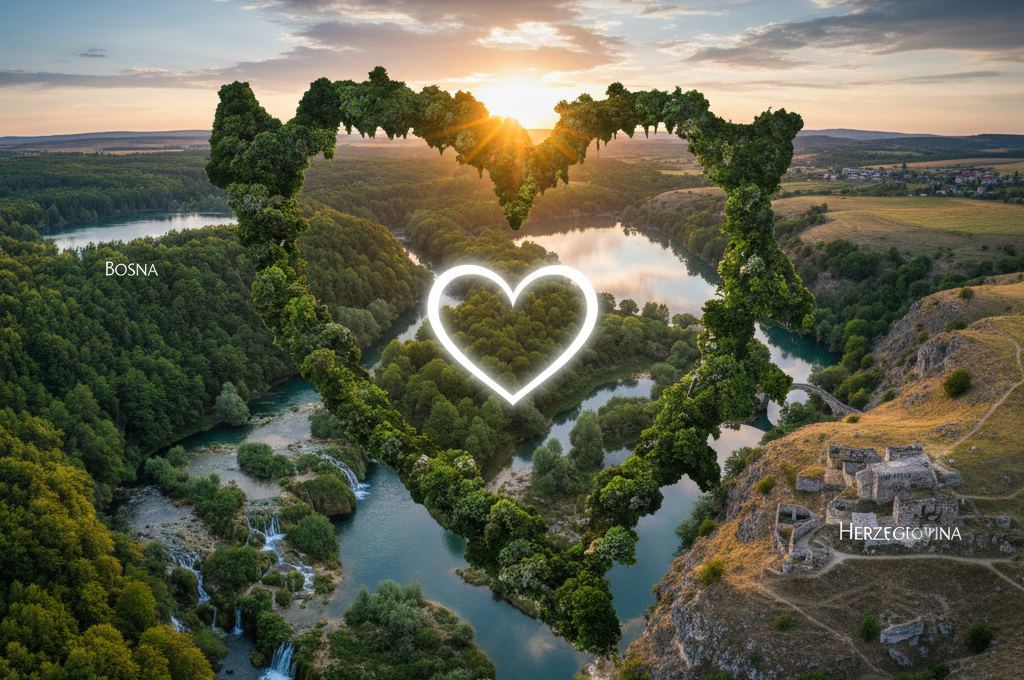
If you look at a map of Europe, right in the southeast, you’ll see a shape that looks suspiciously like a heart. No, that wasn’t a marketing stunt by a graphic designer in the 90s; that is the actual geographical shape of Bosnia and Herzegovina.
They call it the “Heart-Shaped Land,” and honestly, it fits. Not just because of the map, but because this country tends to steal yours the moment you step foot in it.
Bosnia and Herzegovina is complicated. It’s a place where the Mediterranean kisses the Alps, where the call to prayer mingles with church bells, and where history isn’t just something you read in a textbook—it’s something you trip over while walking down the street.
The easiest way to explore beyond Sarajevo is with your own wheels. We recommend booking through DiscoverCars, they compare all the local rental agencies at once, so you’re not stuck paying airport prices for a car you booked in panic the night before.
I’ve spent a lot of time digging into what makes this place tick. Beyond the delicious ćevapi and the endless cups of coffee, there are layers of history and nature here that are downright mind-blowing. So, grab a fildžan (cup) of coffee, settle in, and let me take you through 15 fascinating facts about BiH that prove why this small country is a heavyweight champion of world heritage.
1. Fascinating Facts About BiH: The Name Itself is a Map (Etymology)
Let’s start with the basics. Why “Bosnia” and why “Herzegovina”? It’s not just a random compound word. The identity of the country is literally written in water and stone.
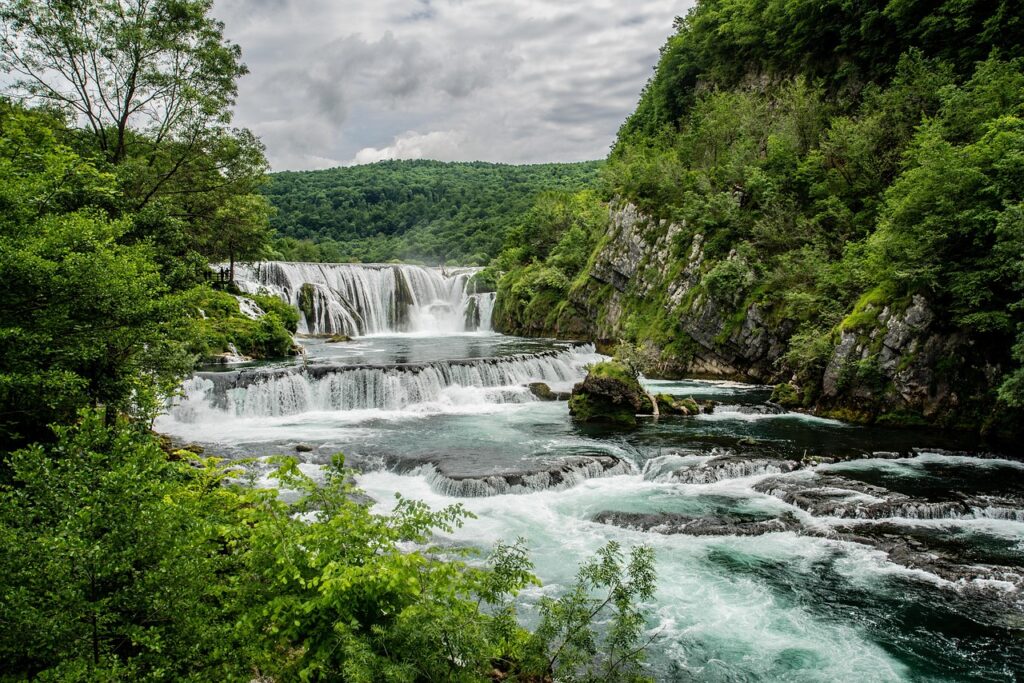
The name “Bosnia” comes from the old Indo-European word Bosana, which translates to “water.” It makes perfect sense. This country is absolutely obsessed with water. Rivers, lakes, waterfalls, underground streams—if it flows, we have it. The water defined the landscape, and the landscape defined the people.
“Herzegovina,” on the other hand, is a nod to a medieval power move. In the 15th century, the ruler Stjepan Vukčić Kosača declared himself “Herceg” (Duke) of Saint Sava. The region, previously known as Hum, eventually took on his title. So, we have a country that is half “Water” and half “Duke’s Land.” It’s a dual identity that has survived empires, wars, and time itself.
2. A Waterfall Wonderland (Even more than you think)
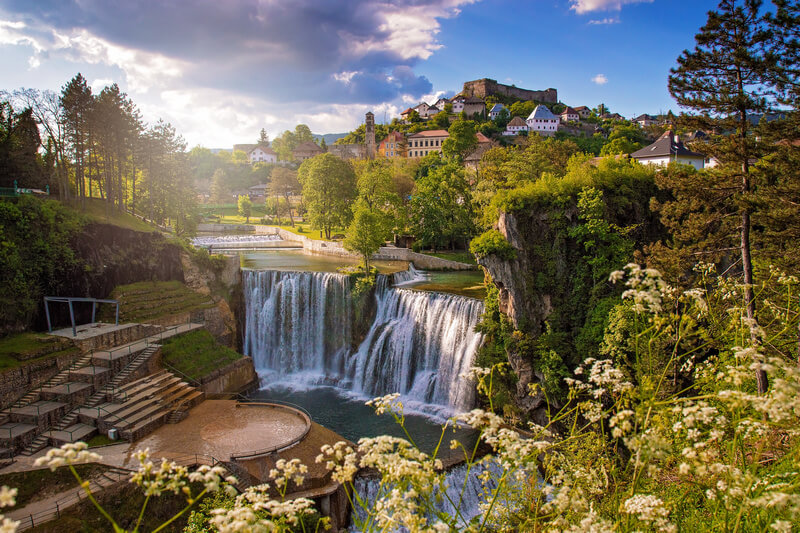
When people think of waterfalls, they usually think of giant tropical jungles or Niagara. But BiH is secretly the European capital of cascading water. We have more waterfalls than almost any other country in Europe.
But I’m not just talking about quantity; I’m talking about quality. You have the Kravica Waterfall, which looks like a lost film set from Jurassic Park, and the majestic Štrbački Buk on the Una River. Then there’s the Skakavac in Perućica (more on that rainforest later), which plunges 75 meters into a canyon so deep you almost need binoculars to see the bottom.
In Bosnia, water doesn’t just flow; it puts on a show.
3. Perućica: Europe’s Last Jungle
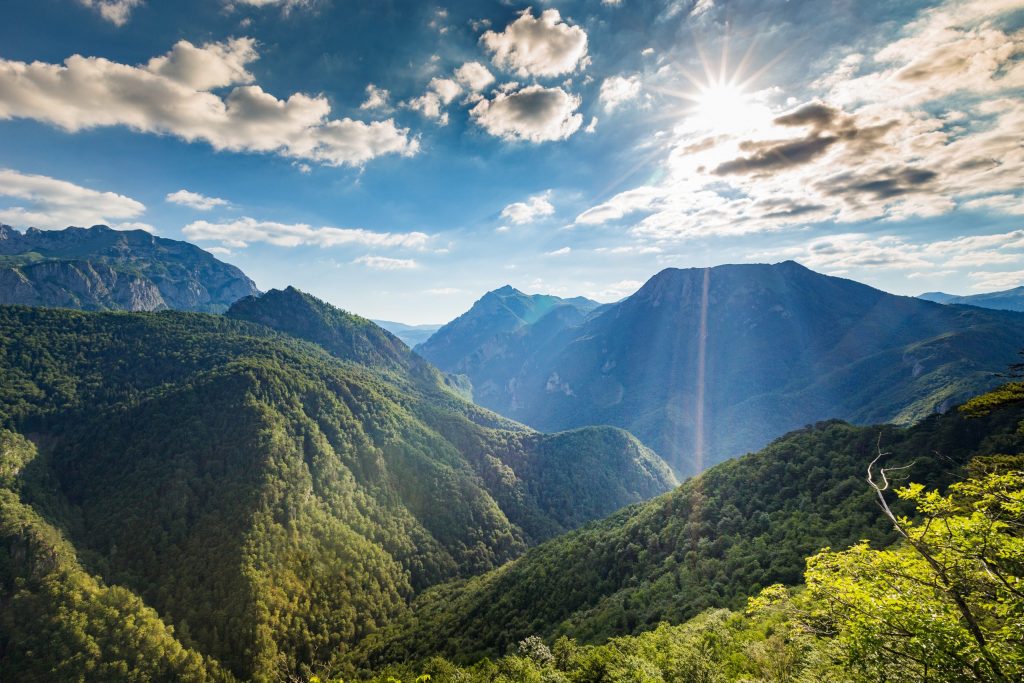
Speaking of Jurassic Park, did you know that one of Europe’s last surviving primeval forests is right here? It’s called Perućica, located within the Sutjeska National Park.
This isn’t a park where you go for a casual Sunday stroll with a latte. This is 1,434 hectares of raw, untouched nature. Some of the trees here are over 300 years old and 50 meters tall. Scientists have found trees that date back to before the industrial revolution, before the Renaissance, essentially growing since nature decided to plant them. It’s strictly protected, meaning humans haven’t messed with it for about 20,000 years. If you want to see what Europe looked like before we paved it all over, this is the place.
4. Vjetrenica: The Cave That “Breathes”
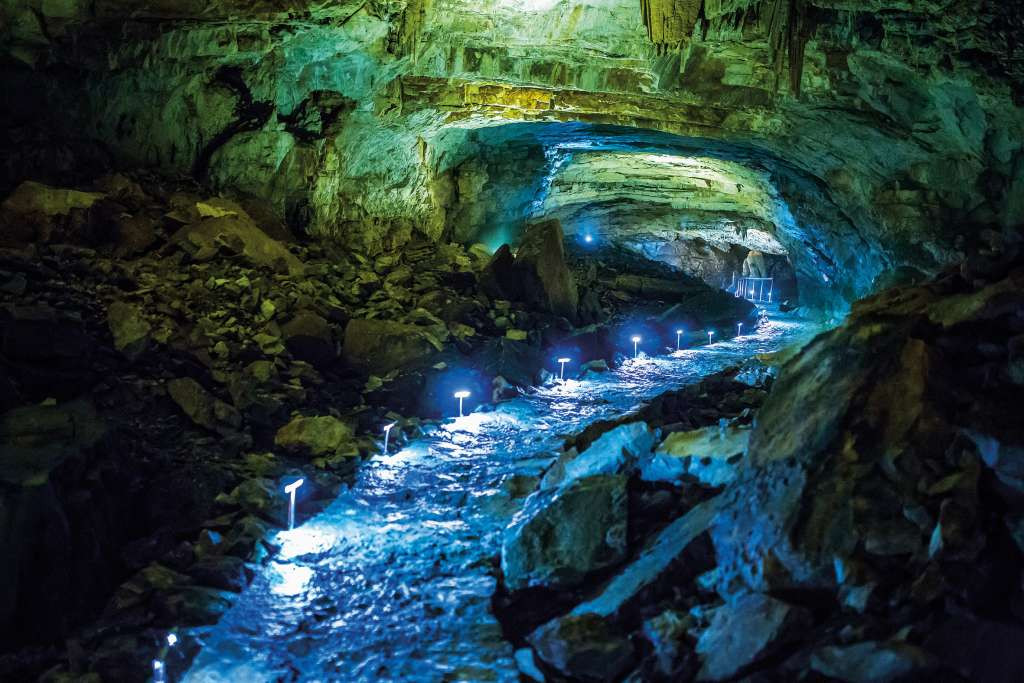
Close to the Adriatic coast lies a cave that is literally a world record holder. Vjetrenica (which translates to “Windy Cave”) was recently added to the UNESCO World Heritage list, and for good reason.
During the summer, a cold wind blows out of the entrance—nature’s original air conditioning. But the real magic is inside. Vjetrenica is the most biodiverse cave in the world. It is home to the “Human Fish” (Proteus anguinus), a blind salamander that looks like a baby dragon and can live for 100 years.
There are over 200 different species living in the pitch black here. It’s an underground kingdom that biologists are still trying to figure out.
5. Sarajevo: The “European Jerusalem”
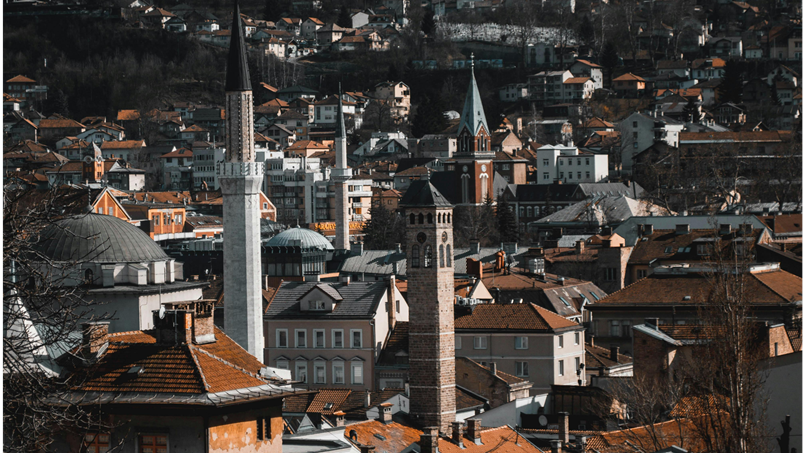
You’ve heard the nickname, but do you know why it sticks? Sarajevo is one of the few places on Earth where you can stand in one spot, spin around 360 degrees, and see a mosque, a Catholic cathedral, an Orthodox church, and a synagogue. And I’m talking about a radius of about 100 meters.
This isn’t a museum exhibit; these are active places of worship. This proximity is the physical proof of Sarajevo’s complex soul. Walk down the main promenade, and you’ll see the “Sarajevo Meeting of Cultures” line on the ground. Step west, and the architecture is Austro-Hungarian (tall, colorful, European). Step east, and you are in the Ottoman era (stone, wood, the smell of grilling meat). It’s the only city where you can time travel just by crossing the street. Walking through these streets can be overwhelming with so much history at every corner. To make sure you don’t miss a thing, check out our essential Sarajevo walking tour itinerary for first-time visitors.
6. The Guinea Pig for Electric Trams
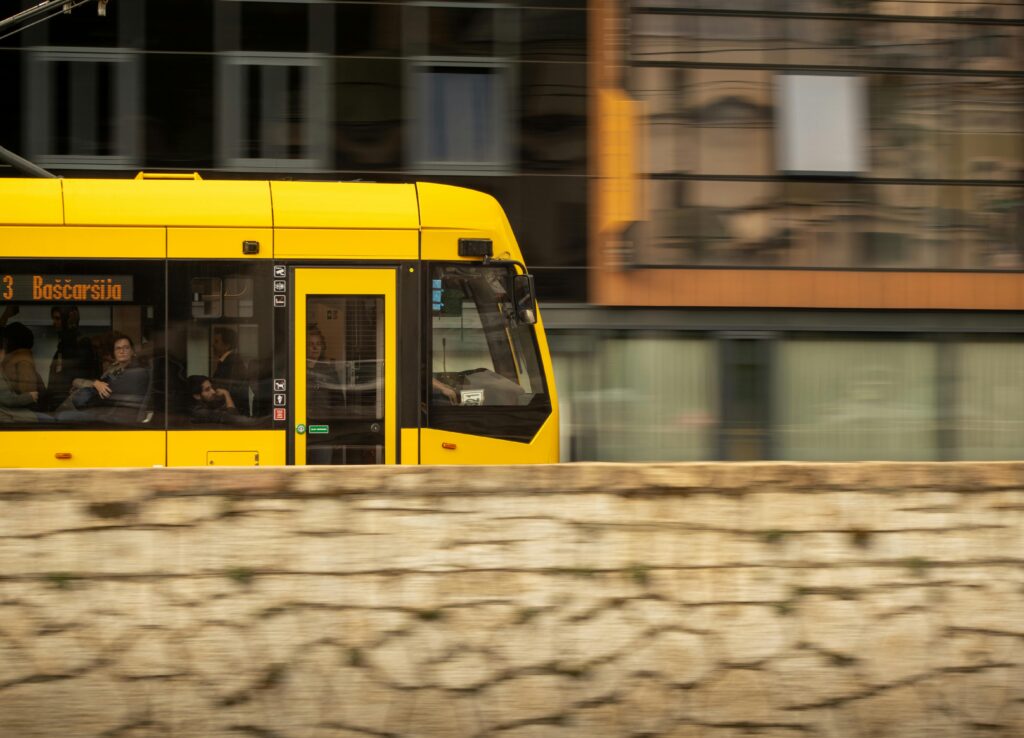
Here is a fun fact to tell your friends in Vienna. Sarajevo had electric trams before Vienna did.
In 1885, the Austro-Hungarian authorities wanted to modernize urban transport. But, being cautious, they didn’t want to dig up the streets of the imperial capital (Vienna) for a technology that might fail. So, they thought, “Let’s test it in Sarajevo first. If it works there, we’ll bring it home.”
And it did work. Sarajevo became the very first city in Europe to have a full-time (dawn-to-dusk) electric tram line. So, next time you see a tram in Vienna, just remember: Sarajevo was the test driver.
7. The Only Public Lunar Clock in the World
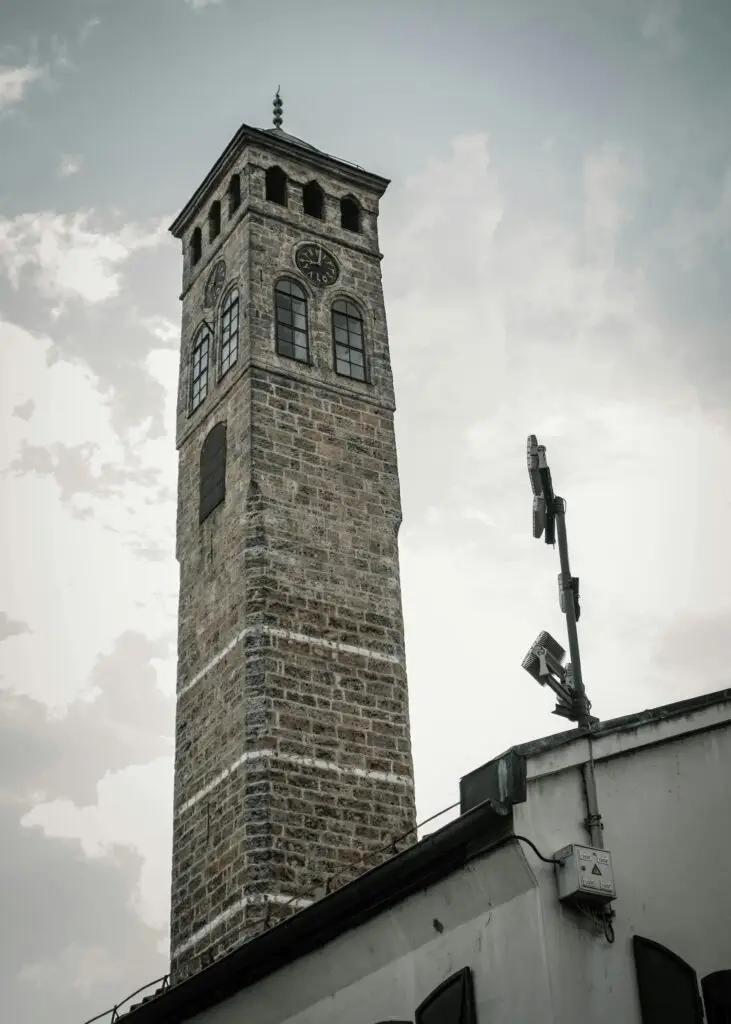
Hidden in plain sight near the Gazi Husrev-beg Mosque in Sarajevo is the Sahat Kula (Clock Tower). At first glance, it looks like any old clock tower. But look closer. The numbers are Arabic, and the time seems… wrong.
That’s because it is the only public clock in the world that keeps lunar time (or “a la turca” time). In this system, the new day begins at sunset, not at midnight. So, when the clock hits 12:00, the sun is setting. This was crucial in the old days for determining the times for the five daily Islamic prayers.
Even today, a muvekit (official timekeeper) has to manually calibrate the clock mechanism every week because the time of sunset changes with the seasons. It’s a beautiful, stubborn refusal to conform to modern standard time.
8. The Old Bridge: Gravity? What Gravity?

The Stari Most in Mostar is the rockstar of Balkan bridges. Built in 1566 by Mimar Hajrudin (a student of the famous Sinan), it was a suicide mission for the architect. The Sultan allegedly told him that if the bridge fell, his head would fall too. No pressure, right?
Hajrudin built a single stone arch, 29 meters wide and 24 meters high, without any central pillars. In the 16th century, this was basically sci-fi engineering. It looked like the stone was floating on air.
Tragically, the bridge was destroyed in 1993 during the war, a moment that broke the hearts of people worldwide. But, like a phoenix, it was rebuilt stone by stone using the original methods and reopened in 2004. Today, it’s a UNESCO site and a stage for the brave (or crazy) members of the Mostar Diving Club who jump off it into the freezing Neretva river. If you are planning to witness these daring jumps in person, don’t miss our complete guide on the best things to do in Mostar beyond the Old Bridge, where we explore hidden gems of the Old Town.
9. The Miracle of the Sarajevo Haggadah
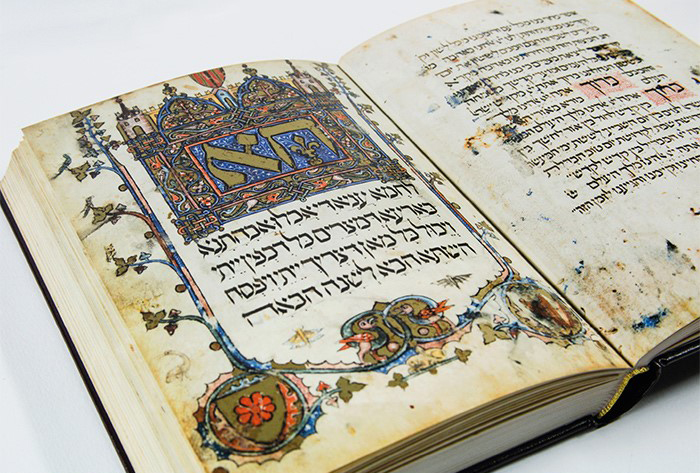
If books could talk, the Sarajevo Haggadah would have the best movie script ever. This Jewish manuscript, created in Barcelona around 1350, is one of the most beautiful and valuable books in existence.
But its value lies in its survival. It survived the expulsion of Jews from Spain in 1492. It survived the Inquisition in Italy. It survived World War II, where a Muslim librarian named Derviš Korkut hid it from the Nazis (legend says he tucked it under his coat or hid it in a mosque in a mountain village). It even survived the Siege of Sarajevo in the 1990s, sitting in a bank vault while the building was being shelled.
Today, it sits in the National Museum, a silent witness to the idea that culture is stronger than hatred.
10. The Wolf Who Charmed the World (Vučko and the ’84 Olympics)

Ask anyone who was alive in the 80s about the Winter Olympics, and they will mention Sarajevo. The 1984 Winter Games were the first to be held in a socialist country, and they were flawless.
But the real star was Vučko. He was the mascot—a wolf. Usually, wolves are the bad guys in fairy tales, but designer Jože Trobec turned him into a lovable, orange-scarf-wearing celebrity. His voice (“Saaaa-raaaa-jeeee-voooo!”) was provided by pop superstar Zdravko Čolić. Vučko became a symbol of Sarajevo’s openness and hospitality. Even today, walk through the Baščaršija bazaar, and you will still see Vučko plushies for sale. He is the mascot that never retired.
11. Lukomir: The Village at the End of the World
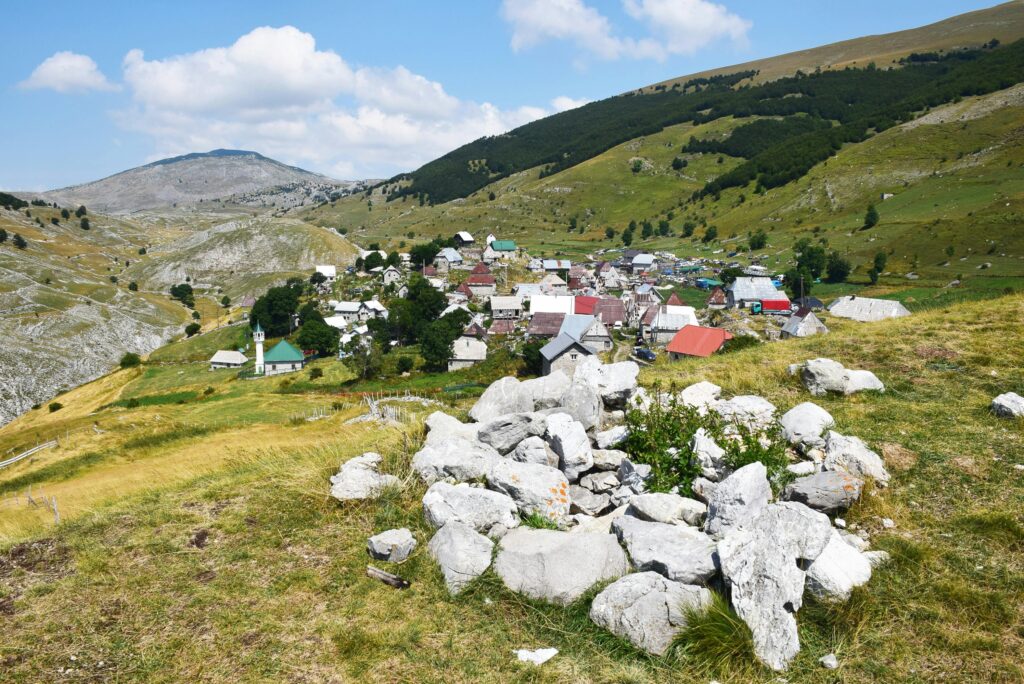
If you want to disconnect—and I mean really disconnect—you go to Lukomir. At 1,495 meters above sea level, it is the highest inhabited village in BiH.
The residents here, often called “Highlanders,” live a semi-nomadic life that hasn’t changed much in centuries. The stone houses have steep roofs covered in cherry wood shingles. The winters are so harsh that the village is completely cut off from the rest of the world for months; people actually lock up their houses and move down to the valley until spring.
Visiting Lukomir feels like walking into an ethnographic museum, except the people are real, the sheep are real, and the coffee they serve you is very, very real. Living at this altitude is a unique experience, and Lukomir is just one of the reasons why our mountains are world-class. See our full review o [the Olympic mountains of Sarajevo for your next winter or summer getaway.
12. Stećci: The Mystery of the Stone Sleepers
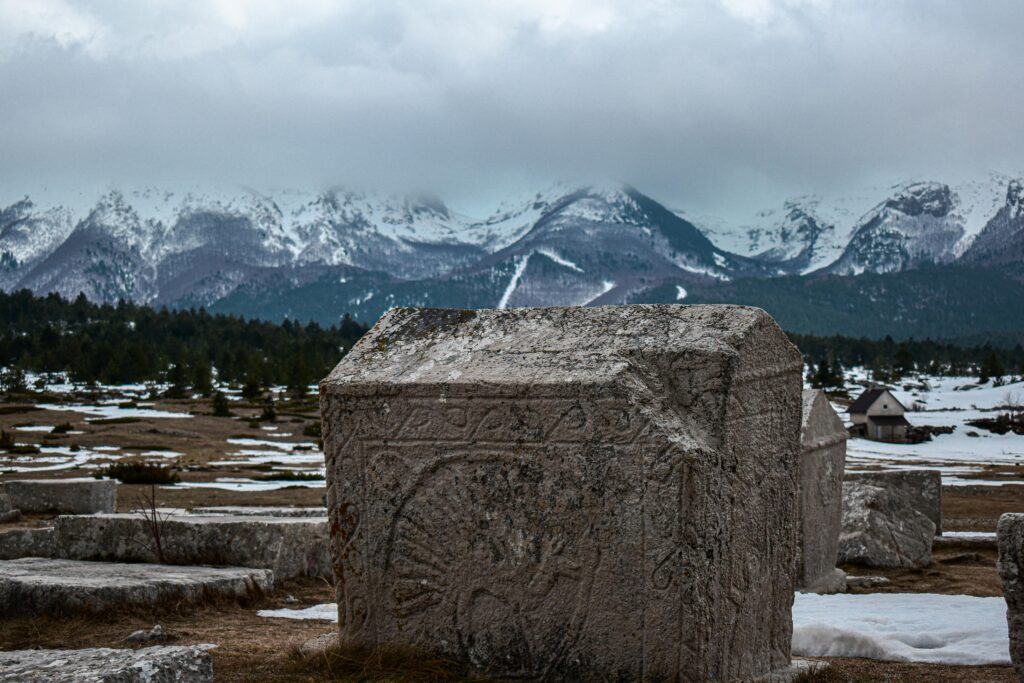
Scattered across the Bosnian mountains are over 60,000 medieval tombstones called Stećci. They date back to the 12th century and are unique to this region.
But these aren’t just grave markers; they are messages. They are carved with strange symbols: stars, crescent moons, deer hunts, and people holding hands in a dance (kolo). One of the most famous motifs is a figure with a raised oversized hand—is he waving? Is he stopping you? Is he swearing an oath? No one is 100% sure.
The epitaphs are equally cryptic and touching, often saying things like, “I was as you are, and you shall be as I am.” They represent a time when the Bosnian Church stood between Rome and Constantinople, creating its own unique path.
13. The Corner That Changed History (Assassination)
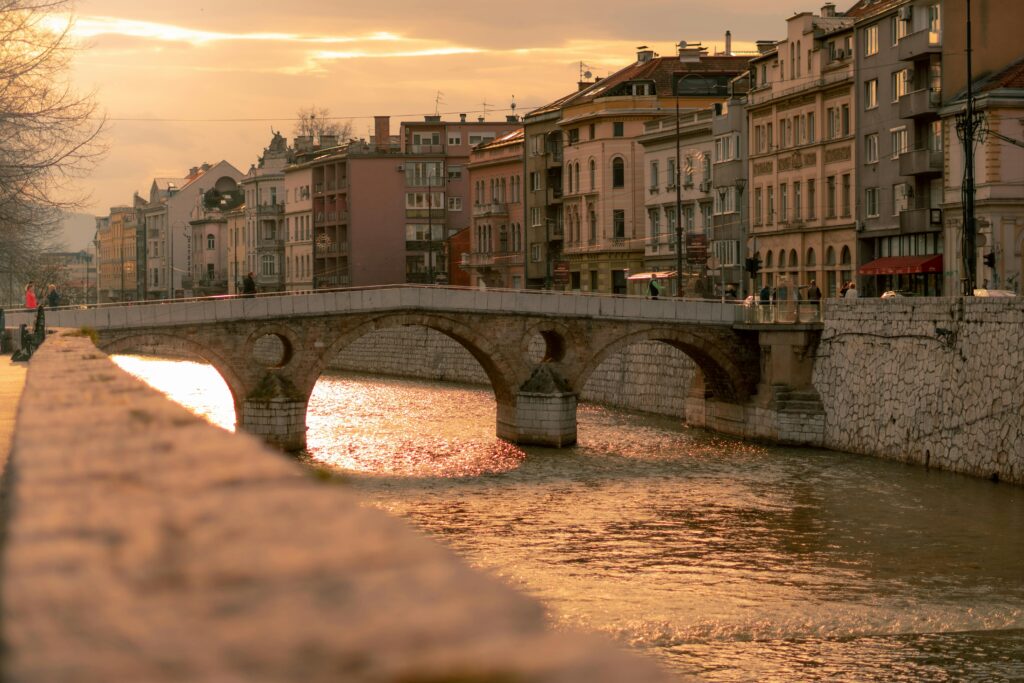
There is a street corner in Sarajevo, right by the Latin Bridge, that arguably shaped the entire 20th century. On June 28, 1914, Gavrilo Princip fired the shots that killed Archduke Franz Ferdinand and his wife Sophie.
The chain of events that followed is unbelievable. A failed bomb attempt earlier that day, a driver who took a wrong turn, the car stalling right in front of the assassin… it reads like a thriller novel. That wrong turn triggered World War I, leading to the collapse of four empires. Standing on that corner today, it’s chilling to think how much history was condensed into a single, tragic moment.
14. Pyramids or Nature? The Mystery of Visoko
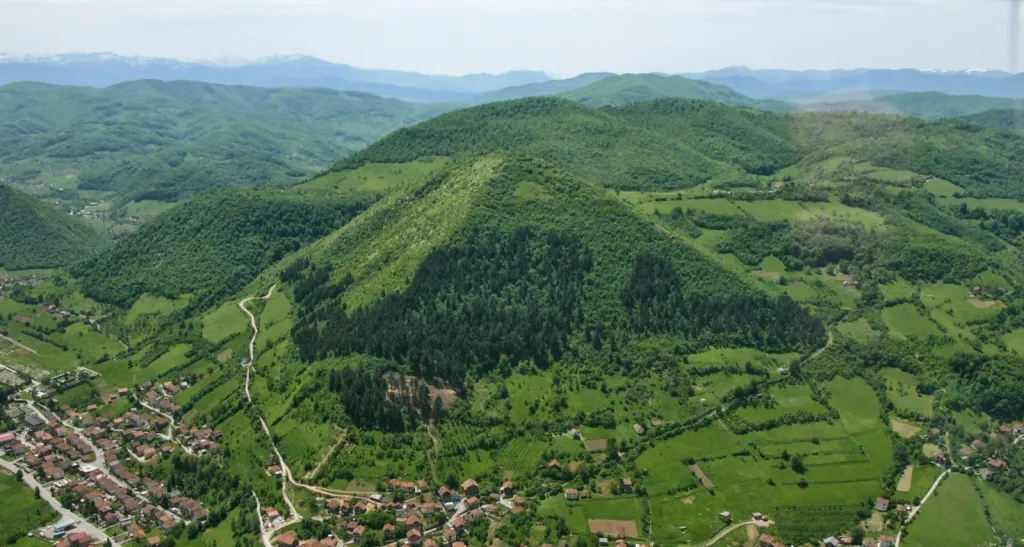
Now, let’s get into something controversial. In the town of Visoko, there are hills that look suspiciously geometric. Since 2005, researcher Semir Osmanagić has claimed that these are the largest ancient pyramids in the world, covered by soil and vegetation over thousands of years.
Mainstream archaeology remains skeptical, calling it a natural geological formation. However, the tunnels found underneath (Ravne Tunnels) are undeniably complex, with high concentrations of negative ions that attract thousands of visitors seeking healing and meditation. Whether you believe they are man-made pyramids or just nature being really good at geometry, the “Valley of the Pyramids” has become a global phenomenon and a massive tourist magnet.
15. The Sanctuary of Međugorje
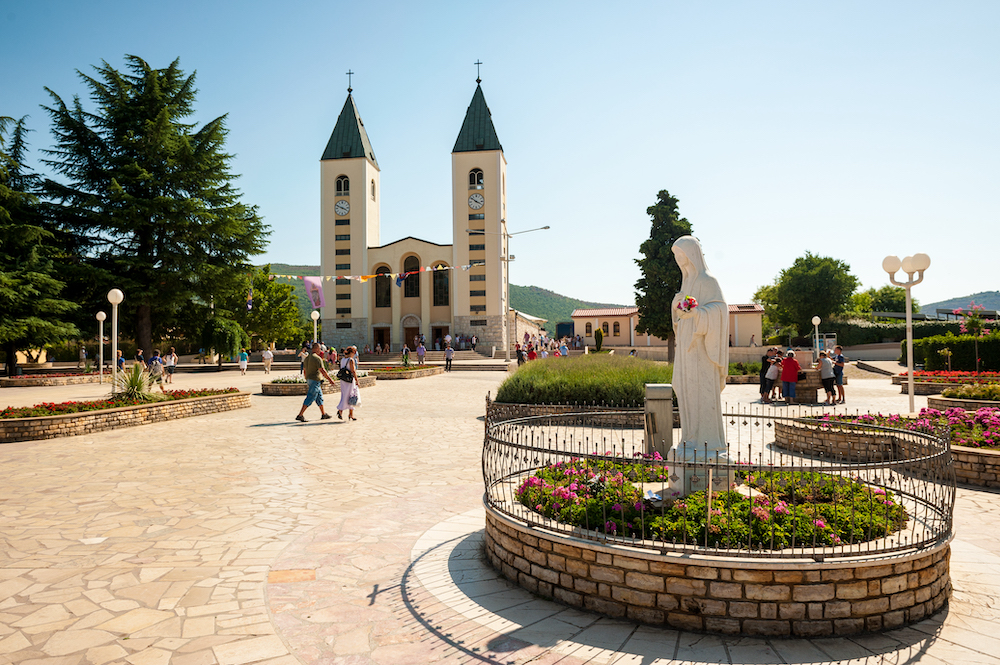
In 1981, six teenagers in a small, rocky village in Herzegovina claimed they saw an apparition of the Virgin Mary. Since then, Međugorje has transformed from a quiet farming hamlet into one of the largest Catholic pilgrimage sites in the world.
Millions of people from every continent have climbed the sharp, rocky path to Apparition Hill. Regardless of your religious stance, the energy in Međugorje is undeniable. It’s a place of massive gatherings, deep silence, and—for many—profound spiritual renewal. It puts a tiny dot on the map of Herzegovina into the hearts of believers worldwide.
The Thread That Ties It All Together
So, there you have it. Fifteen reasons why Bosnia and Herzegovina isn’t just another stamp in your passport. It’s a place of extremes: ancient pyramids and electric trams, tragic history and warm humor, deep caves and high peaks. I hope you enjoyed reading this fascinating facts about BiH, as much as I enjoyed writing about them.
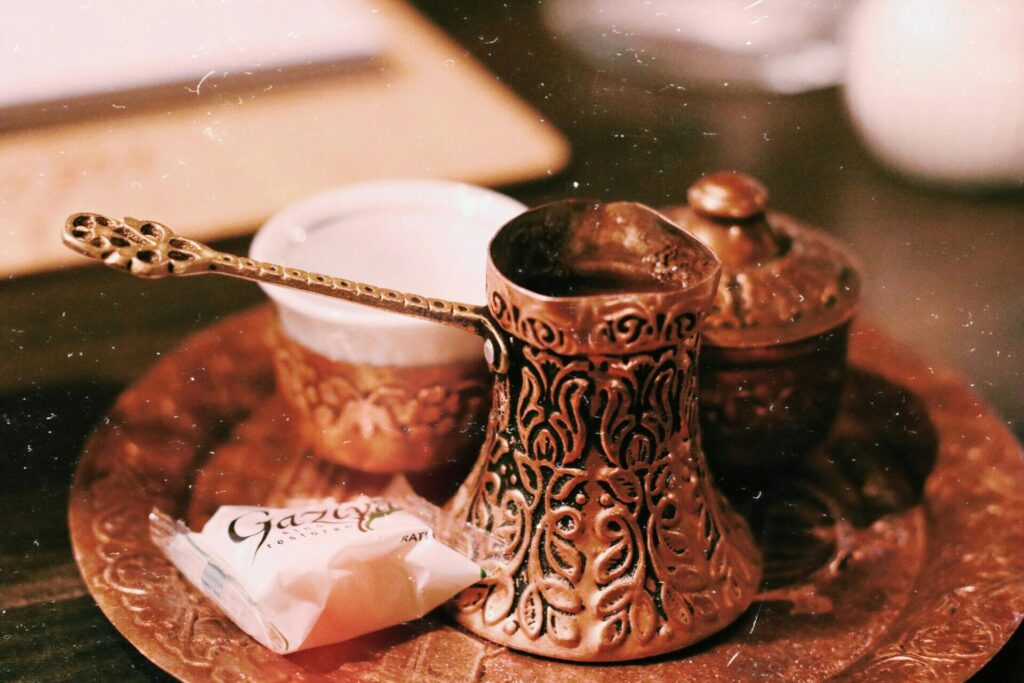
But if you want to understand the real secret of this country, you have to look at the Coffee Ritual. None of these facts matter if you don’t take the time to sit down and discuss them. In BiH, coffee isn’t a caffeine fix; it’s a social institution. It’s the “Razgalica” (the morning cheer-up), the “Razgovoruša” (the conversation starter), and occasionally the “Sikteruša” (the polite hint to leave).
Bosnia and Herzegovina invites you not just to see these sights, but to slow down, sit by a river, peel a sugar cube, sip your coffee, and let the magic of the “Heart-Shaped Land” sink in.