Published under: Food & Drink
At some point during your first morning in Bosnia, someone is going to hand you a warm, flaky, impossibly golden piece of pastry wrapped in paper, point at a glass of cold yogurt sitting next to it, and just stare at you. No explanation. No menu. No context. Just the universal Bosnian message that roughly translates to: eat this, you’ll understand later. Welcome to the world of Bosnian pastries.
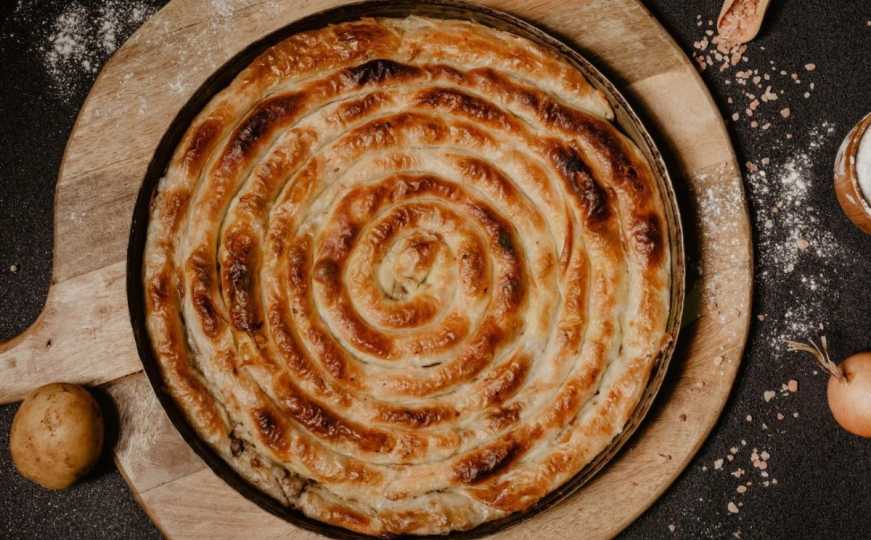
That pastry is burek. Or sirnica. Or zeljanica. Or any of a half-dozen variations that collectively go under the name pita and form the backbone of Bosnian breakfast culture. Call any of them by the wrong name in front of a Bosnian and you will be corrected. Politely, but firmly. Possibly for several minutes.
The easiest way to explore beyond Sarajevo is with your own wheels. We recommend booking through DiscoverCars — they compare all the local rental agencies at once, so you’re not stuck paying airport prices for a car you booked in panic the night before.
This is your guide to not getting corrected.
First Things First: What Is Pita?
Before we get into specifics, let’s sort the terminology, because this is where most tourists stumble.
Pita is the umbrella term. In Bosnian it just means “pie” and refers to any filled phyllo pastry. Think of it as the category. Burek, sirnica, zeljanica, and krompiruša are all types of pita, each named after its filling. So burek is a pita, but pita is not always burek. This distinction will matter shortly.
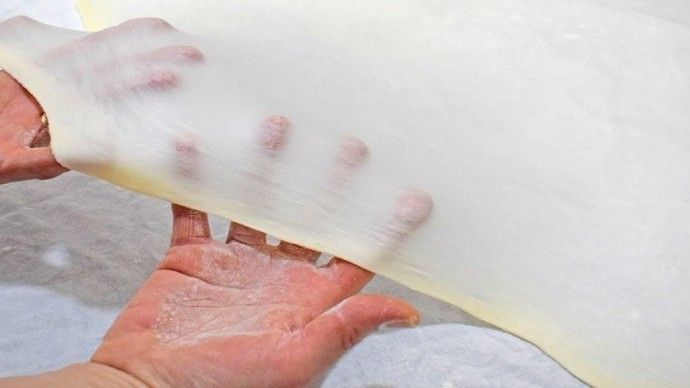
The dough itself is called jufka. It’s made from flour, water, salt, and oil, then stretched by hand across a large table until it’s so thin you could read a newspaper through it. Not an exaggeration. Good jufka is genuinely translucent. In professional pekare (bakeries), bakers do this for hours every morning. The skill takes years to develop, and the result has an uneven thickness that creates pockets of crispiness no machine can replicate.
In Sarajevo and any Bosnian town worth visiting, the pekara opens at 6am. Fresh burek arrives at 6:01am. By 7:30am, if you haven’t been there, you’ve missed the best batch. The early bird gets the burek.
Burek: The One That Started the Argument
Let’s talk about the elephant in the pekara.
Burek, as a concept, exists across the entire Balkans and Middle East. Turks have it. Albanians have it. Greeks have it. Everyone has some version of a phyllo pastry with filling. In most of these countries, “burek with cheese” is a perfectly normal phrase that produces a perfectly normal result.
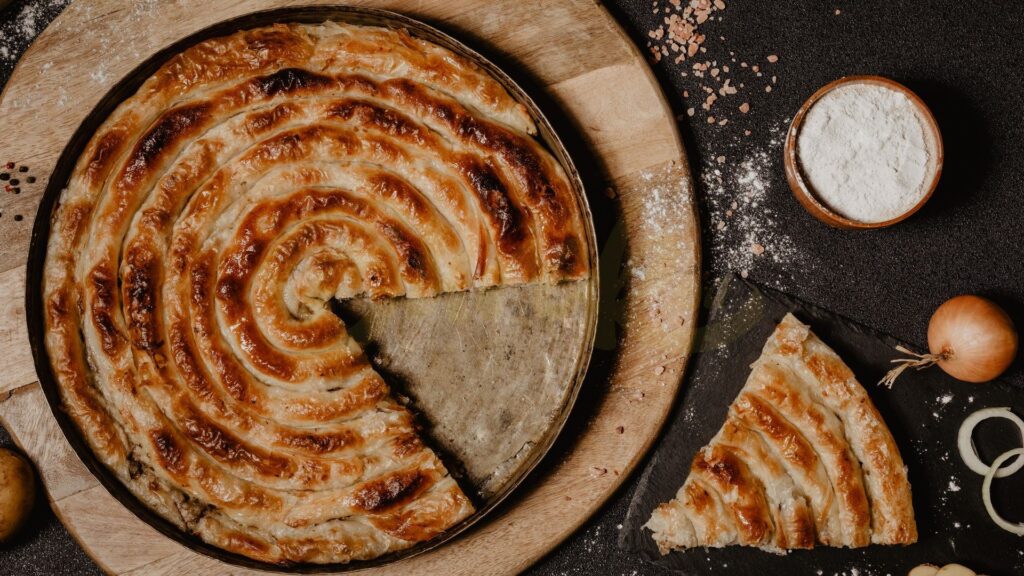
In Bosnia, asking for burek sa sirom (burek with cheese) will get you a lecture. Possibly from the baker. Possibly from the person standing behind you in the queue. Possibly from a stranger on the street who overheard.
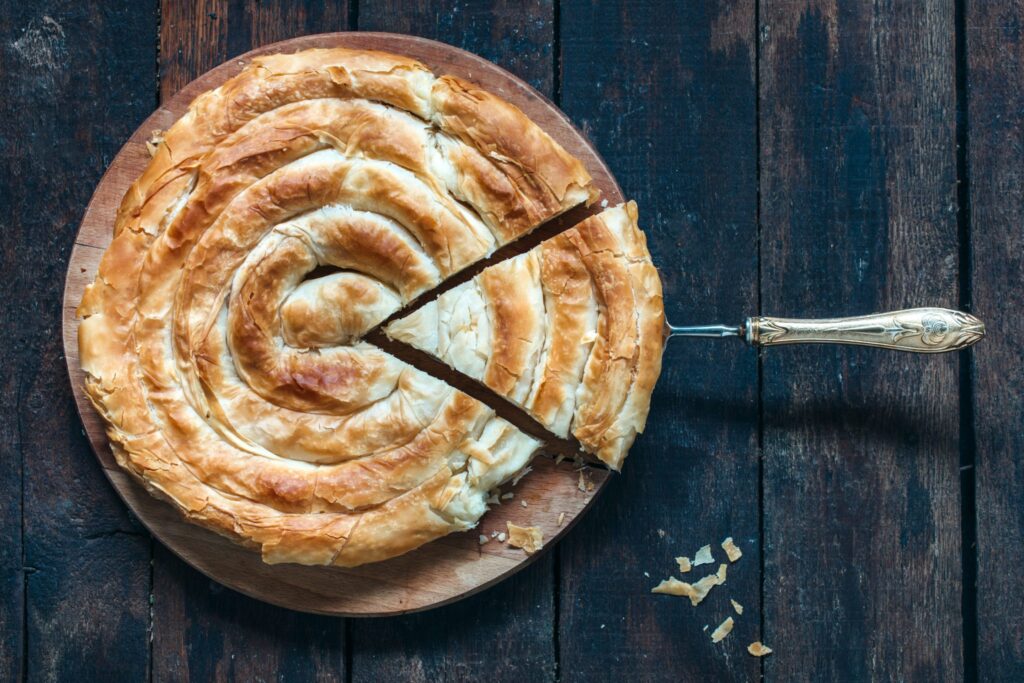
Because in Bosnia, burek means one thing: meat. Specifically, finely minced beef (or a beef and lamb mix), combined with onion and oil, rolled into jufka and coiled into a round tray called a tepsija. If you want cheese, there’s a separate word for that. We’ll get there.
In 2012, Lonely Planet included Bosnian burek in their “The World’s Best Street Food” book. This surprised approximately nobody in Sarajevo.
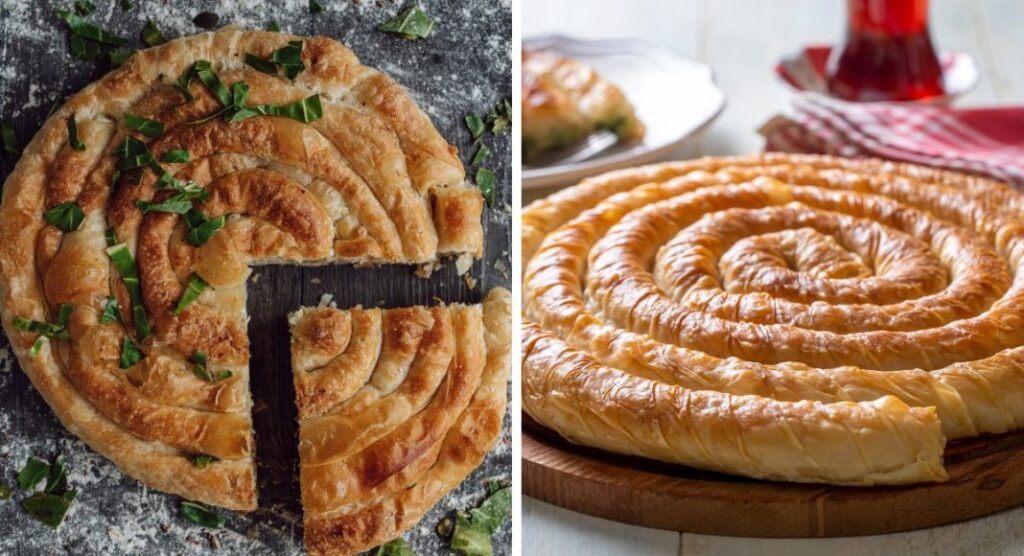
The coiling matters, by the way. Good burek is shaped into a spiral and baked in a round tray. The outer layers go golden and crispy while the inside stays soft and juicy from the filling. You get a crispy edge and a tender middle in the same bite. It is as good as it sounds, which is saying something.
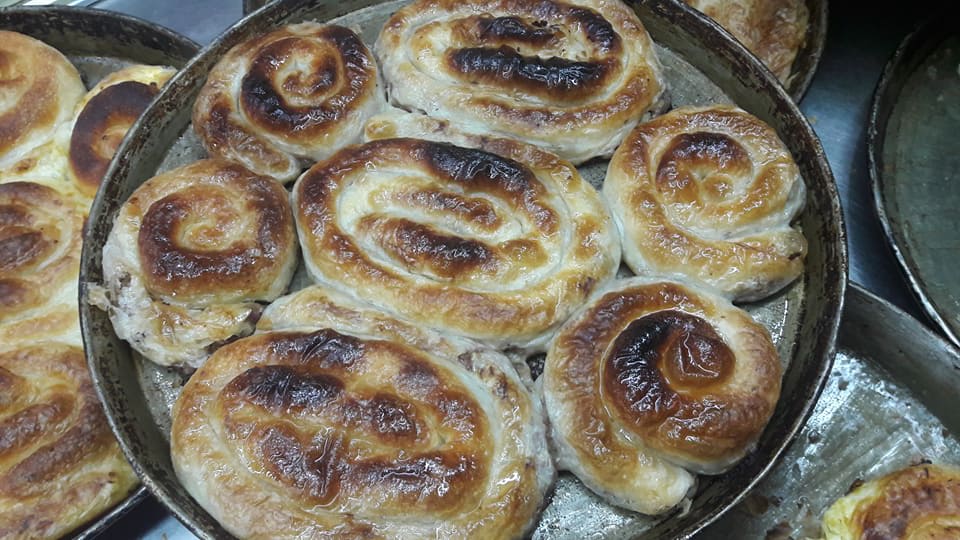
How do you eat it? The baker cuts you a slice, weighs it, and hands you a glass of cold thin yogurt. Not Greek yogurt. Not flavored yogurt. Plain, drinkable Bosnian jogurt, cold enough that condensation forms on the glass. You eat the burek and take sips of yogurt between bites. The yogurt cuts the richness of the pastry. It is a deeply functional pairing, and once you’ve had burek this way, eating it without yogurt feels like something has gone wrong with your day.
Burek arrived in Bosnia through the Ottoman Empire’s trade routes in the 16th century, carrying over from Central Asia and the Middle East. Several centuries later the technique has changed very little. The best pekare still stretch the dough by hand. You can taste the difference.
Sirnica: The One You’ll Probably Love More (And That’s Fine)
Sirnica is cheese pita. Same dough as burek, same spiral shape, same round tepsija. The filling is fresh farmer’s cheese, usually a soft unsalted variety, mixed with eggs and sometimes a spoonful of sour cream.
The result is lighter than burek. Where burek is rich and meaty, sirnica is creamy and mild. The cheese melts into the layers during baking, the egg binding sets the filling, the outside stays just as crispy. The inside is softer.
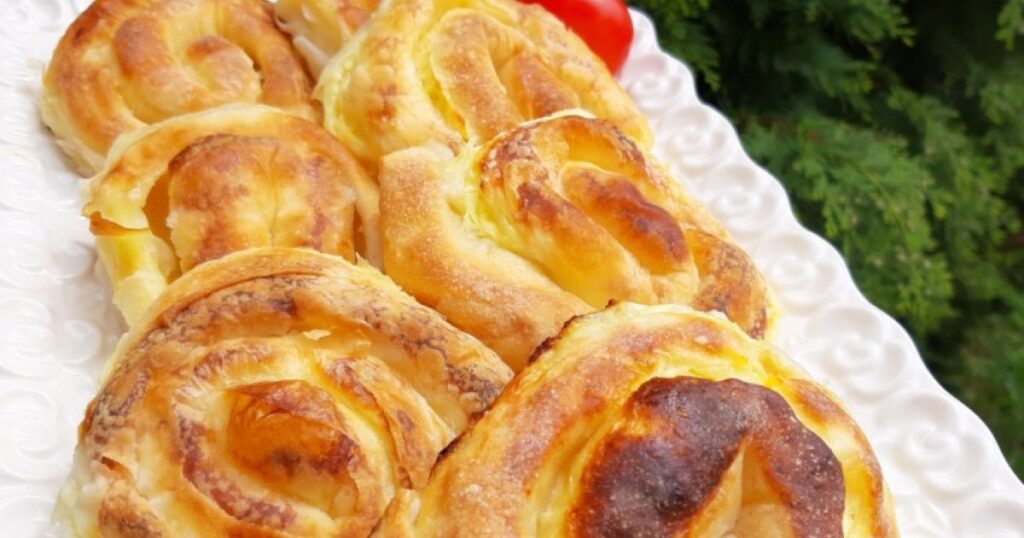
If burek is breakfast for someone who needs to build a wall today, sirnica is breakfast for someone who has a long pleasant morning ahead and wants to ease into it.
The cheese question always comes up with foreign visitors: what kind of cheese? Traditionally it’s bijeli sir, a fresh white cheese with no good Western equivalent that sits somewhere between ricotta, cottage cheese, and a mild feta. Some pekare use a blend of cheeses for more depth. Some add a little butter. Some spoon extra sour cream on top after baking. Every baker has a slightly different version, and every Bosnian family believes their version is definitive.
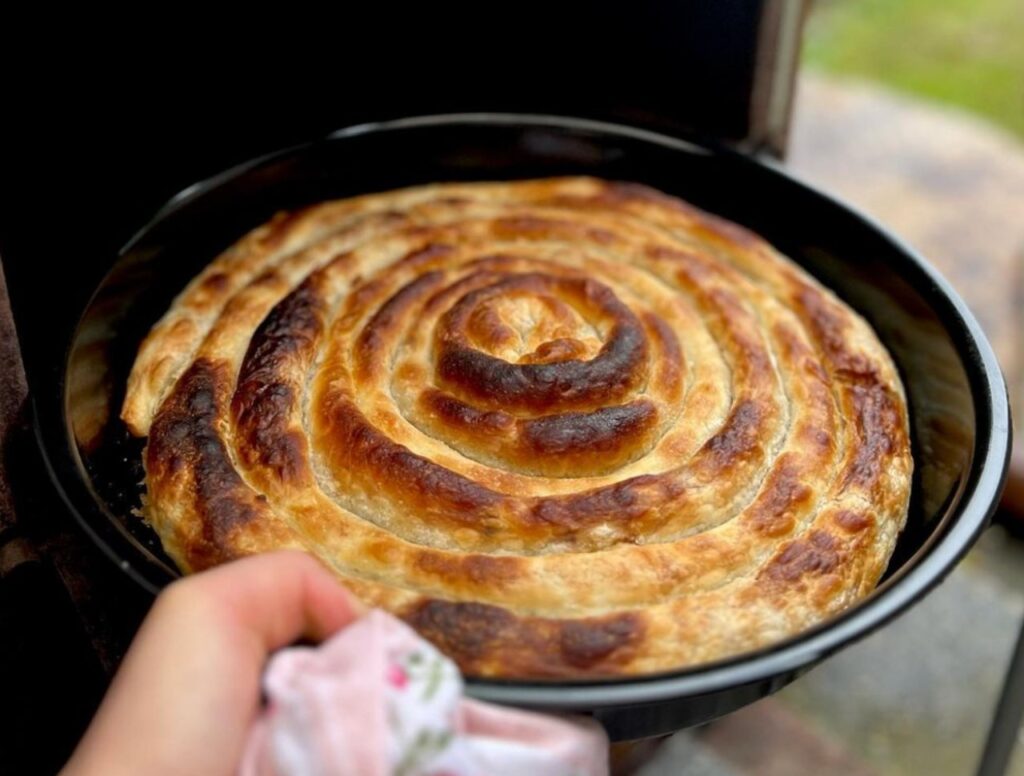
One important thing: if you’re in a pekara and you ask for “burek” while pointing at the sirnica tray, the baker will tell you that’s sirnica, not burek. This is not pedantry. Bosnia cares about pastry classification the way Italy cares about pasta shapes. The names exist because the things are different.
Zeljanica: The One Vegetarians Can Actually Eat
Zelje means leafy greens. Zeljanica is the green pita: phyllo dough filled with spinach (or sometimes chard) and white cheese, bound with eggs.
It’s the closest thing in the Bosnian pita world to Greek spanakopita. But the Bosnian version is coiled rather than layered flat, and the cheese is fresher and milder than feta, which gives the whole thing a softer character.
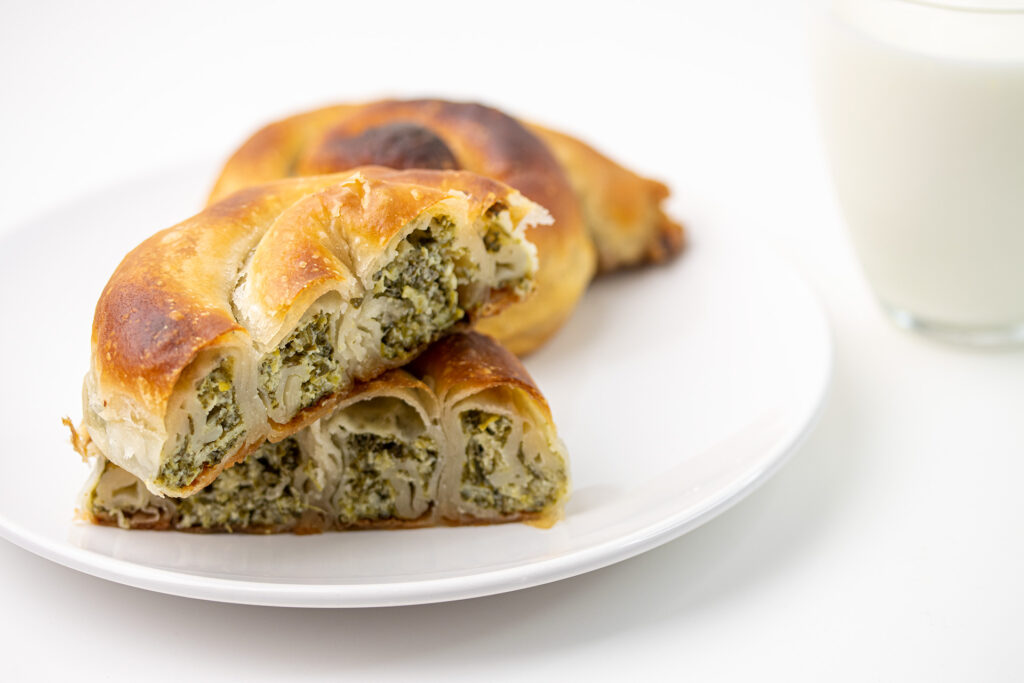
Zeljanica is the default option for vegetarians visiting Bosnia, and it holds up well. The spinach and cheese combination is earthy and mild, the pastry is just as crispy as the others, and the cold yogurt pairing works exactly as well.
Worth knowing: zeljanica and sirnica hold their texture better later in the day than burek does. If you’re eating after 10am and the burek in the case is looking like it’s been there a while, the cheese or spinach version is the safer bet.
Krompiruša: The One That Sounds Less Exciting Than It Is
Krompir means potato. So krompiruša is potato pita, which sounds like the least glamorous option in the case and is in fact one of the most satisfying things you can eat for breakfast in the Balkans.
The filling is grated potato, onion, and oil. Sometimes a little salt and pepper, sometimes a touch of butter. That’s it. No cheese, no eggs. Just potato filling inside crispy jufka.
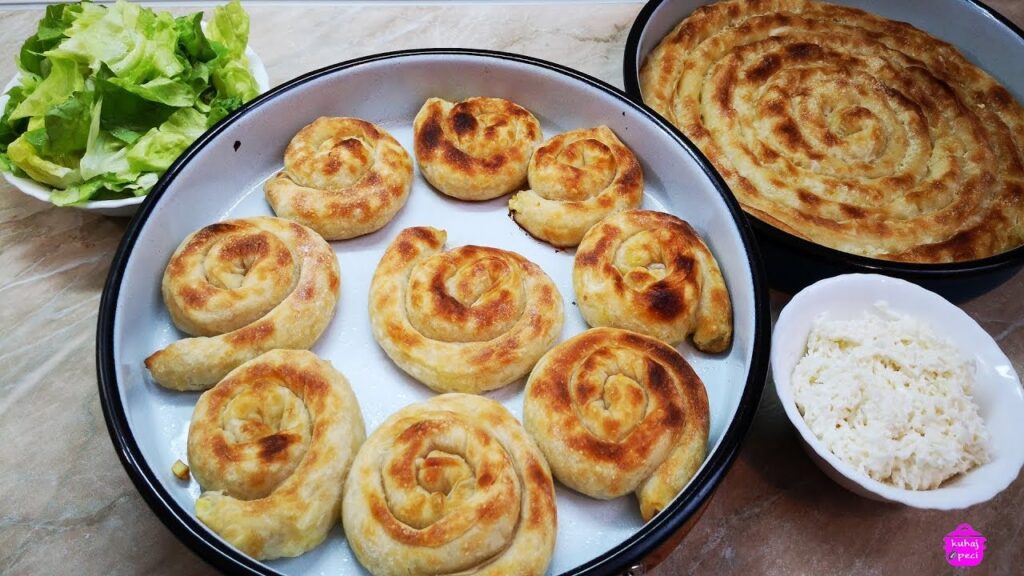
The magic is the contrast between the pastry and the soft steamed potato inside. Done well, it’s comfort food at its most straightforward. It’s also the cheapest option in most pekare and the one locals tend to order when they’re genuinely hungry rather than treating themselves.
If you’re travelling on a tight budget (extremely easy to do in Bosnia), krompiruša is your friend. Order one with yogurt, find a seat outside the bakery, watch the morning happen around you. This is the right way to experience a Bosnian town before 9am. Tuzla, by the way, has its own strong pekara culture worth exploring — if you’re heading that way, a guided tour of Tuzla and Gradina Castle makes for a great day out and guarantees you’ll find the right spots to eat.
How to Order Like You Know What You’re Doing
Walk into a pekara. The pastries are usually behind glass or in a display case, already baked and ready. You’ll see round spiral trays, some with filling visible at the cut edge so you can tell what’s what.
Point at what you want. Say the name if you can. The standard order is a portion (“jednu porciju, molim”) of whichever pita you want, plus yogurt (“i jogurt”). The baker cuts your portion, weighs it (price is by weight), plates it or wraps it in paper, and hands you a glass of yogurt.
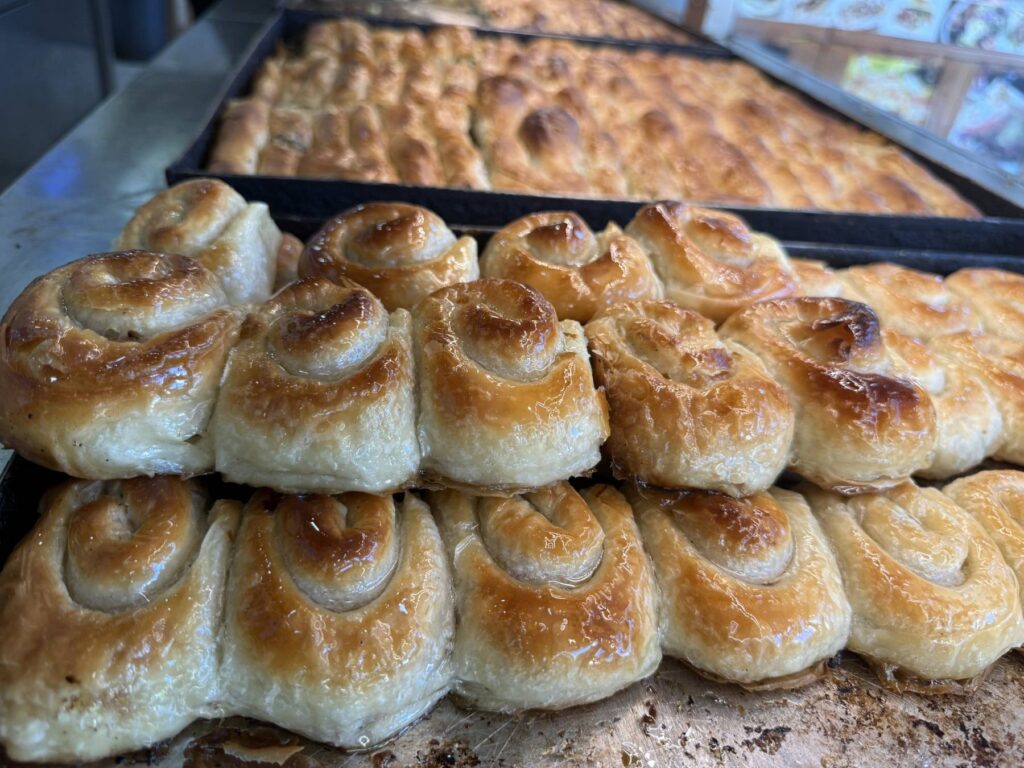
That’s the whole transaction. No menu. No “what size would you like?” Bosnian pekare run on the efficiency of places that have been doing one thing very well for a long time.
A typical portion runs between 1 and 2 Bosnian marks (roughly 0.50 to 1 euro) depending on size and location. With yogurt, you’re almost certainly under 3 marks for a full breakfast. This is one of the many reasons to love Bosnia.
Where to Find the Best Pita
Honestly? Your nose. Follow the smell of baking pastry in any Bosnian town and you’ll find somewhere good.
More specifically: in Sarajevo, the pekare in Baščaršija and along Ferhadija are reliable. Locals debate endlessly which specific bakery is the best and everyone’s answer is different, which is a very good sign about the general quality level. If you want someone to take you straight to the good spots without the guesswork, the Sarajevo Grand Walking Tour covers the old town and includes the kind of local food stops that don’t make it onto any map. In Mostar, the pekare near the Old Town and along Bulevar are where locals eat breakfast. The tourist zone near Stari Most is fine but the real morning is slightly off the main drag.
A guided walk through Mostar’s Old Town will take you past the best pekare on the way to Stari Most — and a good guide will tell you exactly where to stop for breakfast. If you’re doing a day trip from Mostar to Blagaj, Počitelj and Kravica, eat your pita before you leave — you won’t find a proper pekara once you’re out of town.
Everywhere else: any pekara that opens before 7am and has a small queue by 8am is probably worth stopping at.
The general rule: eat fresh, eat early. Pita from 7am and pita from noon are different experiences. Not bad at noon. Just different, the way the first coffee of the morning is never quite the same as the second.
The Names, One More Time
Since you’ll want these ready when you’re standing at the counter at 7am, not quite awake yet:
Burek is meat. Minced beef, or beef and lamb. This is the only one called burek. Nothing else is burek.
Sirnica is cheese. Fresh white cheese, eggs, sometimes sour cream.
Zeljanica is spinach and cheese.
Krompiruša is potato and onion.
Pita is the word for all of them. The category, not the specific pastry.
Write these on your hand if you need to. Bosnians will be delighted that you tried and forgiving if you mix them up, but getting it right earns you a small amount of quiet respect, which in Bosnia counts for quite a lot.
One Last Thing
If you’re in Bosnia and someone’s grandmother makes pita from scratch for you, you sit down and eat it. No excuses, no dietary complications, no “I just had breakfast.” Homemade jufka stretched by hand is a completely different object from bakery pita, which is already excellent. It’s thinner, more irregular, crispier and somehow more tender at the same time.
She has been making this for fifty years. She is not interested in your feedback. Just eat it and say domaće je uvijek bolje (homemade is always better). She will agree completely, because it’s true, and you will have made a friend for life.
Best meal you’ll have in Bosnia. You have been warned.
Enjoyed this? Check out our guide to 5 Bosnian Dishes Beyond Ćevapi for more food you’ll want to eat every day. And if you’re planning a full trip, the 7-Day Bosnia Road Trip Itinerary covers where to find the best pekare along the route.