
Published under: Things to Do, Destinations
Here’s a thing most people don’t know about Bosnia: one theory says the country’s name comes from the old Indo-European word bosana, which means “water.” Whether that’s etymologically airtight or just a nice story locals like to tell is debatable. What isn’t debatable is that this country is absurdly, unreasonably full of water. Glacial lakes. Karst rivers. Underground springs that surface as full-sized rivers right out of a cliff face. Waterfalls that look like someone designed them for a screensaver and then forgot to add tourists.
And before you go anywhere, sort your rental through DiscoverCars — most of these swimming spots are not exactly on the bus route.
If you grew up swimming in lakes that were technically lakes but mostly weed and lukewarm regret, Bosnia is going to recalibrate your expectations.
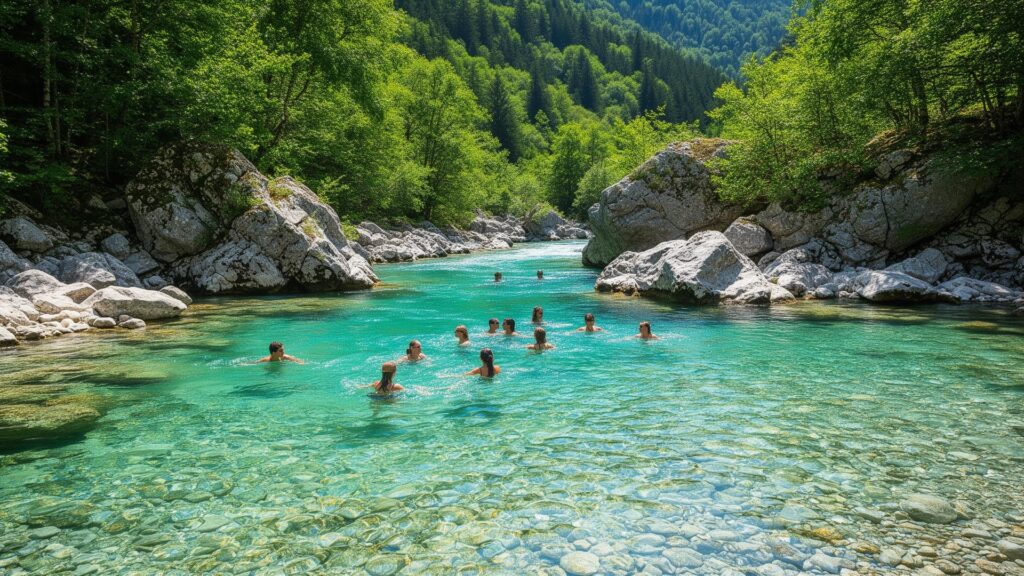
Wild swimming, in case you’ve missed the rise of this particular wellness trend, is the slightly grand name for what humans have been doing since they figured out water exists. You find a river or a lake. You get in. You swim. The only difference now is that Instagram has discovered it and slapped a hashtag on it. The practice itself has been happening in the Balkans for centuries, and Bosnians have a long tradition of jumping into shockingly cold rivers for reasons ranging from “it’s summer” to “it’s January 19th and there’s a religious cross in there somewhere.”
So here’s where to do it properly.
A Quick Reality Check About Water Temperature
Before we get into the locations, one thing worth knowing: Bosnian rivers are cold. Not “refreshing cold.” Cold cold.
The Neretva, which we’ll get to in a minute, holds the title of one of the coldest rivers in Europe. Summer highs sit around 7°C. That’s not a typo. The Tara peaks at maybe 12°C in August. These rivers are fed by alpine glaciers and underground karst springs, and they did not get the memo that summer is supposed to make water warm.
The lakes are kinder. Pliva Lake’s smaller pool gets up to 20°C in July and August. Boračko Lake, fed by mountain streams but not directly glacial, is properly swimmable in summer. The Adriatic at Neum is in the mid-20s.
The point is: come prepared. Pack a swimsuit, sure, but also pack the mental willingness to gasp out loud the first time you get in. This is part of the experience. Locals will laugh at you. They’ve been laughing at this since the Ottomans.
The Rivers
The Una River (Bihać region)
If you ask a Bosnian to name the most beautiful river in the country, there’s a 50% chance they say Una. The other 50% they say it depends, which is the Bosnian way of saying they don’t want to commit but also it’s the Una.
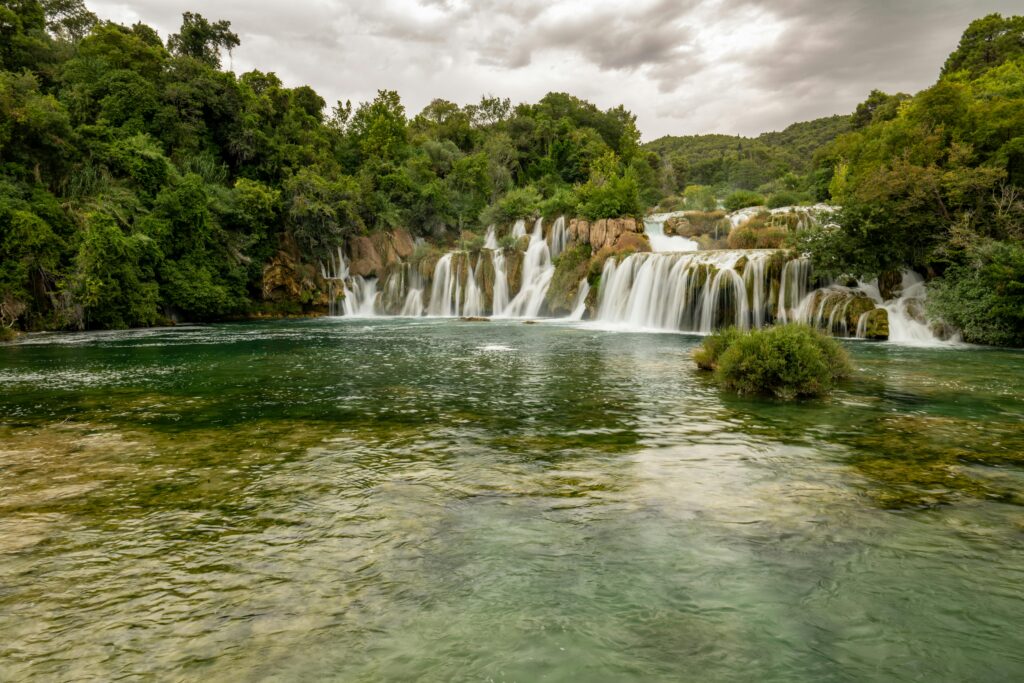
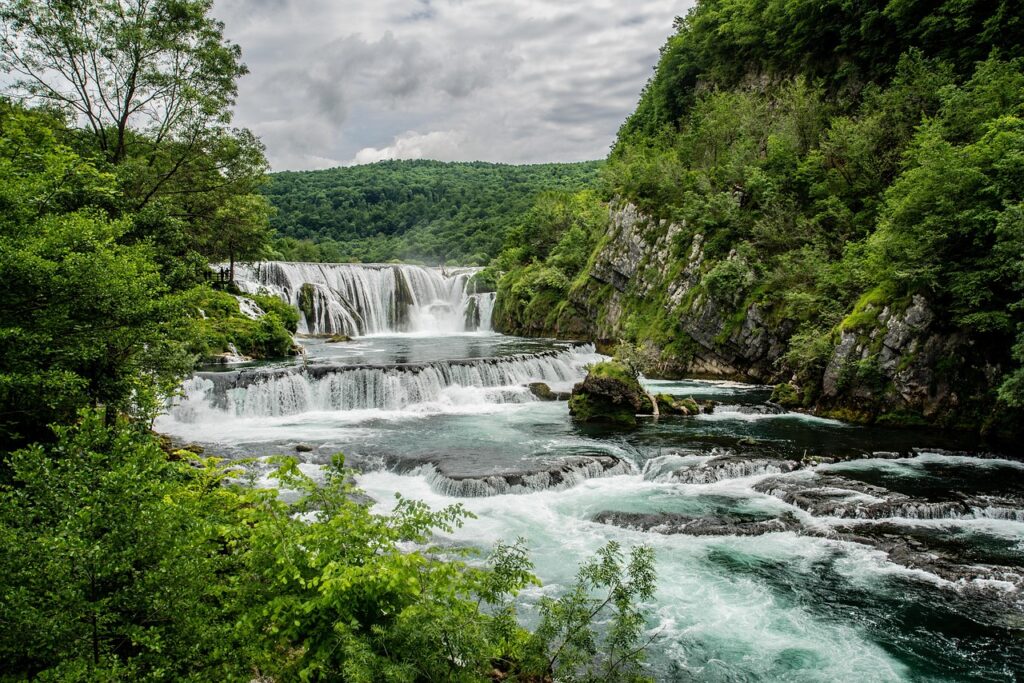
The Una flows through Una National Park in the northwest, near Bihać, and it does something rivers usually don’t bother with: it’s turquoise. Not “kind of greenish in the right light” turquoise. Actually, distinctively, ridiculously turquoise. The colour comes from the high mineral content of the karst limestone the water flows through, and the result is a river that genuinely looks unreal in photographs because your brain isn’t sure if someone has filtered it.
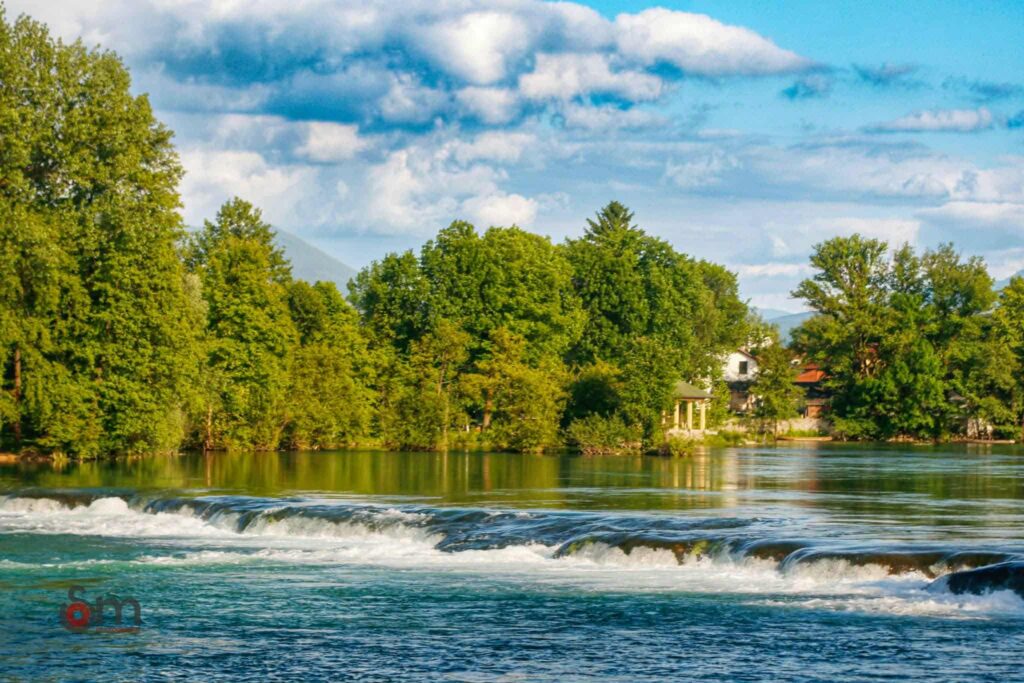
You can swim almost anywhere along it. Štrbački Buk, the park’s signature 25-metre waterfall, has calmer pools downstream where the water is shallow and clear enough that you can watch fish ignore you. The waterfall itself is for looking at, not for swimming under, unless you’d like to test the structural integrity of your spine.
Or, if you’d rather experience the Una properly instead of just staring at it from the shore, this guided rafting tour is probably the best way to do it. Equal parts adrenaline, scenery, and mild regret about not bringing a waterproof phone case.
The water is cold. Not Neretva-cold, but cold enough. Worth it. Always worth it.
The Neretva River (Konjic, Mostar)
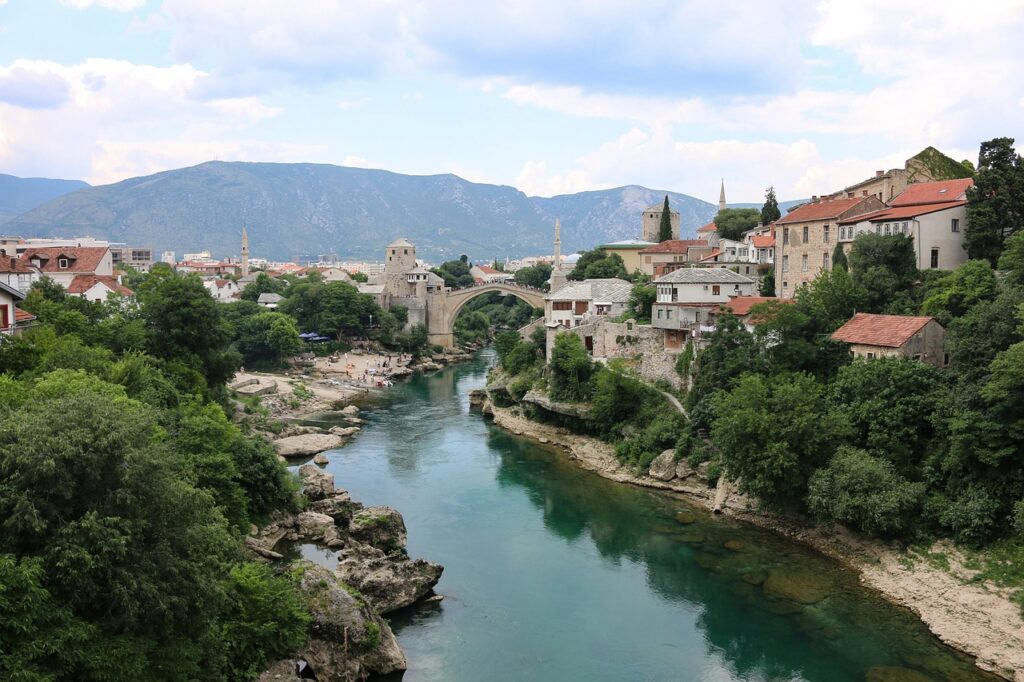
I said it earlier and I’ll say it again: this is one of the coldest rivers in Europe. Mostar’s famous Old Bridge divers don’t jump into the Neretva because it’s pleasant. They jump because they’re being paid, or because it’s a competition, or because they’re nineteen and immortal.
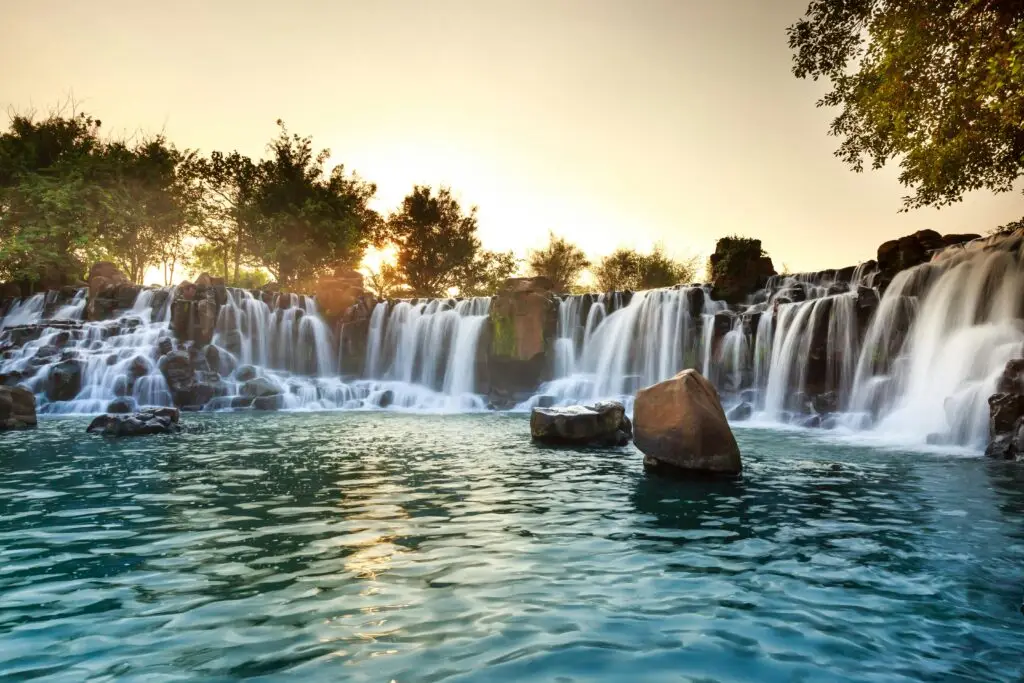
But the Neretva is also one of the most beautiful rivers you’ll ever swim in, and it gets warmer (slightly) as it moves south. Around Konjic, the river is alpine and clear and surrounded by mountains. By the time it reaches Mostar, it’s the famous emerald-green that ends up on every postcard.
You can swim in calmer sections around Mostar, downstream from the bridge, where locals lay out towels on the rocks and stay all afternoon. Just don’t be the tourist who tries to jump from the Old Bridge after watching the divers. People do this. People also occasionally end up in hospital. The bridge is 24 metres high and the water is genuinely freezing. The divers train for years. Just sit, watch, and have a cold drink instead. That’s the correct activity.
If floating through the Neretva sounds more appealing than testing your survival instincts off the Old Bridge, this kayaking tour near Mostar is a much smarter idea. Same stunning river, significantly lower chance of embarrassing yourself.
The Trebižat River (Herzegovina)
The Trebižat is the warmest swimmable river in Bosnia, and it’s possibly the most beautiful one nobody outside the country has heard of. It’s 50 kilometres long and changes its name nine times along its course, which sounds like a clerical error but is actually just how rivers worked here before bureaucracy arrived. Locals know it variously as Tihaljina, Mlade, and several other names depending which village you’re standing in.
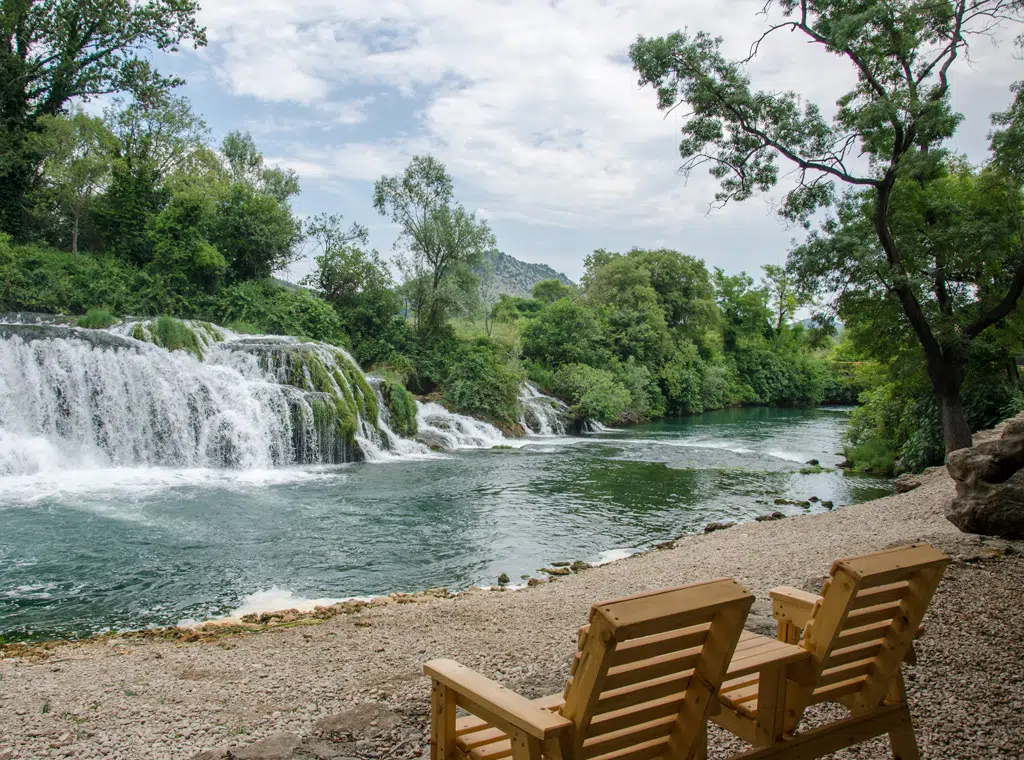
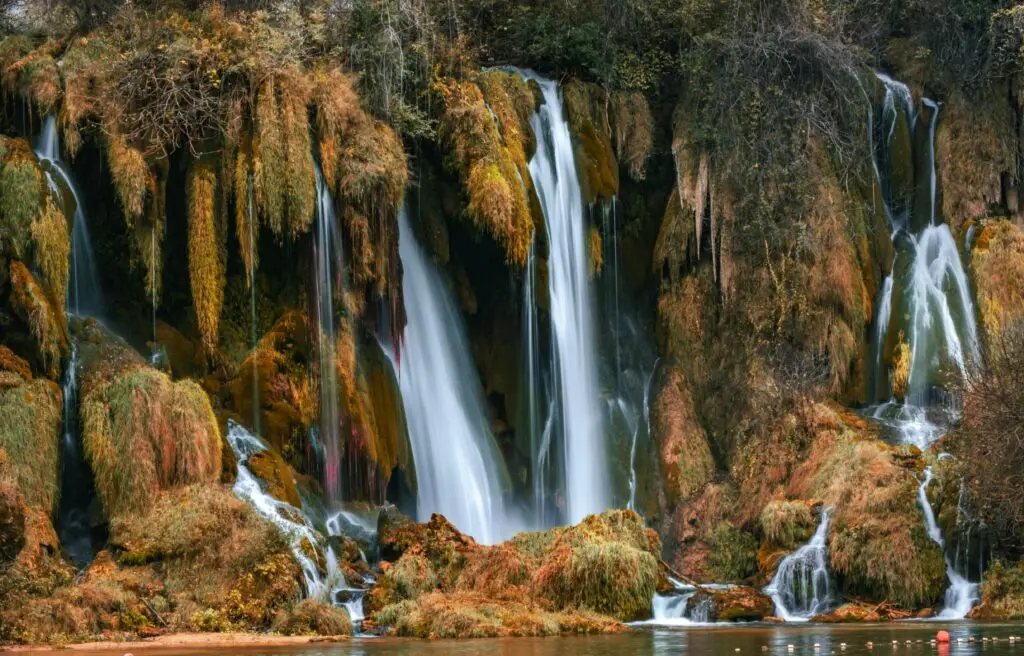
It also feeds Kravica Waterfalls, where the swimming hole is the most popular natural pool in the country. But the real Trebižat experience is finding the hidden swimming spots between the named places. The kind locals point you to with that slightly proud look that says, “yeah, we know.”
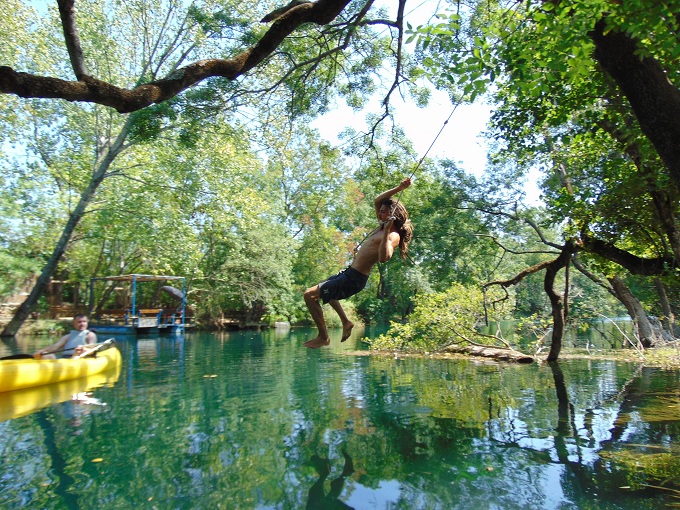
Bring water shoes. The bottom is karst and unfriendly to soft feet. Pack a picnic. Stay all day. This is the Bosnian river you can actually relax in without your teeth chattering.
If you want the easiest way to experience Kravica and the emerald-green Trebižat without figuring out Balkan roads and border crossings on your own, this day tour does the hard part for you. You just bring the swimsuit and pretend you discovered the place first. You can book it here: Mostar & Kravice Waterfalls tour.
The Drina River (Eastern Bosnia)
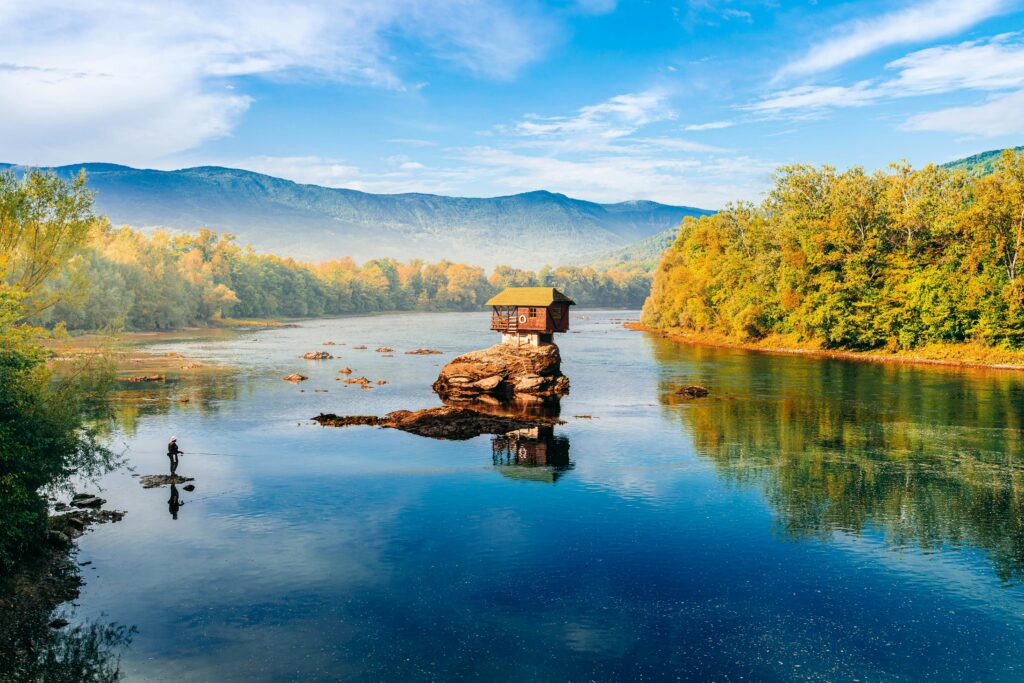
The Drina forms the border with Serbia in the east and runs through some of the most dramatic karst canyons in the Balkans. It’s deep, blue, and almost mythologically famous in this part of the world (if you’ve read Ivo Andrić’s Nobel Prize-winning The Bridge on the Drina, you’ve already been here in your head).
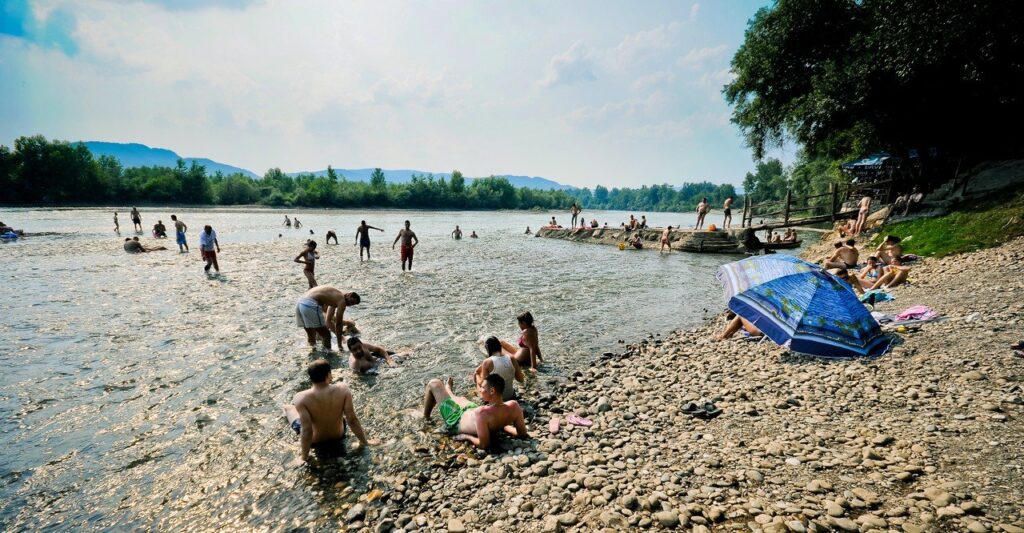
Summer water temperatures sit around 20°C in calmer sections, which is practically a hot tub by Bosnian standards. The town of Višegrad on its banks is worth the trip on its own. Combine a visit to the famous Mehmed Paša Sokolović Bridge with a swim somewhere along the river upstream, and you’ve got the kind of day that makes you reconsider your travel priorities for the rest of your life.
If you want to see why the Drina has inspired novels, songs, and a borderline unhealthy level of regional obsession, this full-day tour is a pretty good place to start. Expect unreal scenery, absurdly clear water, and at least one moment where you seriously consider never leaving the Balkans. You can book it here: Drina River & Tara National Park tour.
The Lakes
Boračko Lake (Near Konjic)
If you only swim in one Bosnian lake, make it Boračko. It’s a glacial lake at about 400 metres elevation, surrounded by forested mountains, and it has the kind of emerald-green colour that you assume must be edited but actually isn’t. The water is clean enough to drink (don’t drink it). The setting is quiet enough to hear yourself think (you won’t want to think). The temperature in summer is warm enough to actually stay in for more than 30 seconds.
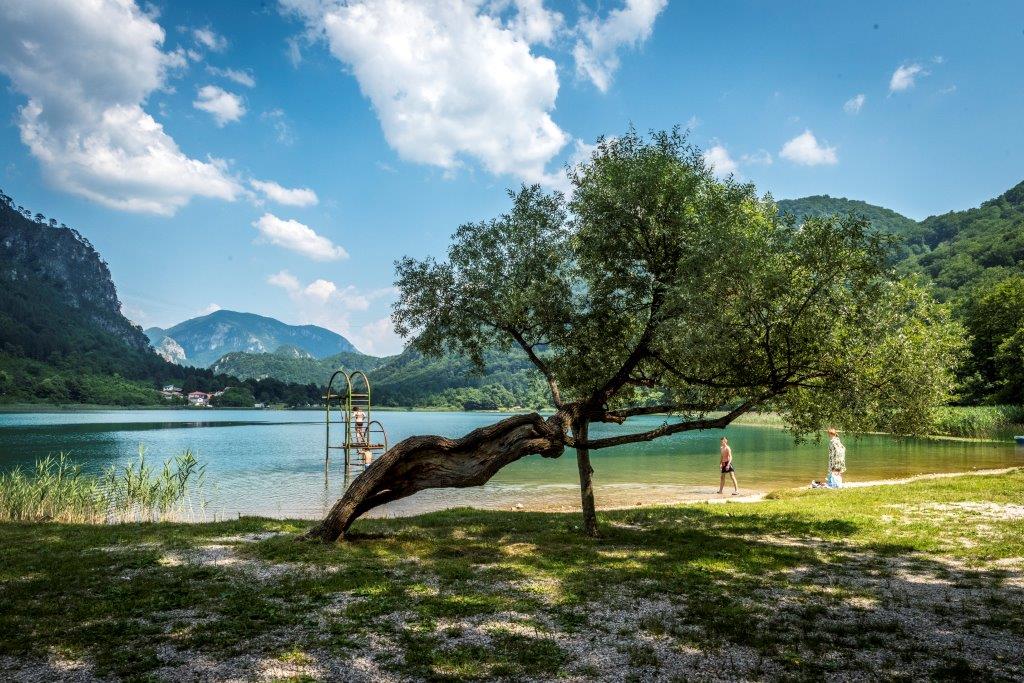
There’s a small village. There are eco-cottages. There’s a campsite. There are people kayaking, swimming, fishing, and doing very little in a serious and committed way. This is the Bosnian summer ideal, distilled into one location.
About 90 minutes south of Sarajevo by car. Worth a full day. Worth two.
If you want the full Boračko experience without thinking about maps, mountain roads, or which turn you were supposed to take 20 minutes ago, these tours handle the logistics so you can focus on what matters — swimming, staring at the water, and pretending you could live like this permanently.
You can book it here:
Boračko Lake & Lukomir 4×4 tour
Tito bunker & Boračko Lake tour
Pliva Lakes (Near Jajce)
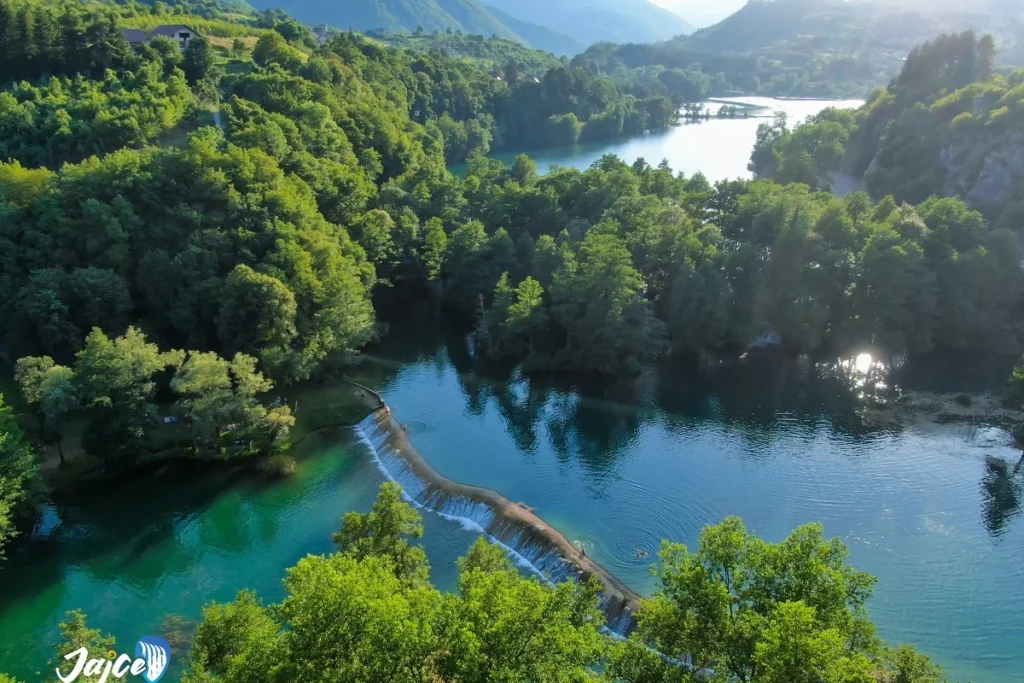
There are two Pliva Lakes, sensibly named Veliko (Big) and Malo (Small) Plivsko Jezero. They sit just outside the town of Jajce in central Bosnia and they’re connected by a stretch of river where you can still see working wooden watermills from the 16th century. The mills are called mlinčići and they look like a small wooden village built on stilts in the middle of a river. Because that’s exactly what they are.
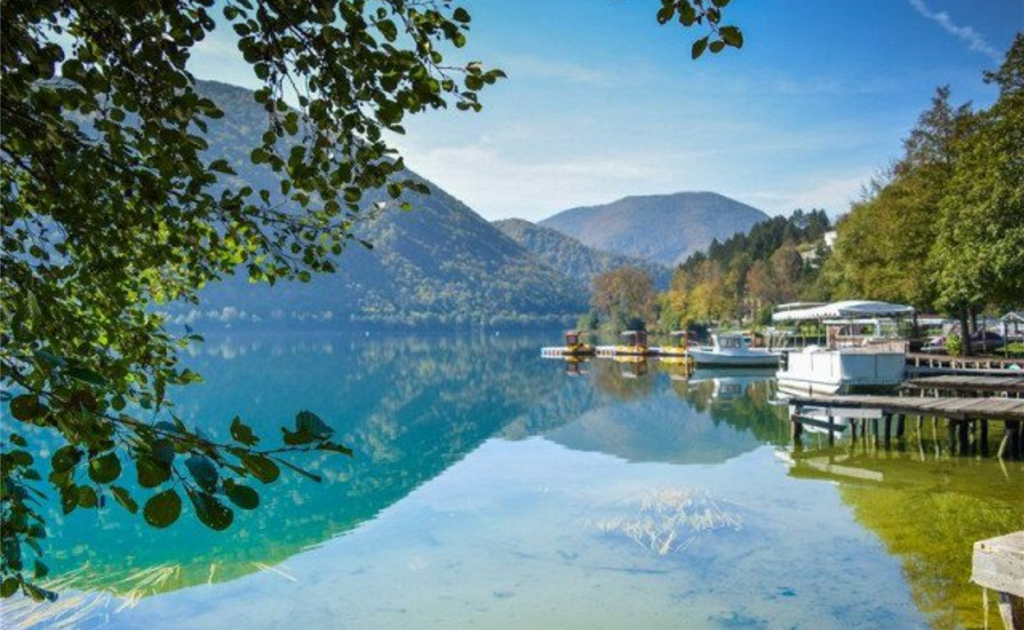
The Veliko Plivsko Lake hosted the European Kayaking Championships in 1963. The water is clear, the surroundings are lush, and the smaller lake hits a swimmable 20°C in July and August. Combine this with a visit to Jajce’s 22-metre waterfall in the centre of town (yes, the town has a major waterfall right in its middle, this is just how Jajce is) and you have one of the best single days you can spend anywhere in central Bosnia.
If you want to turn the Pliva Lakes, the 16th-century mlinčići, and Jajce’s absurdly central waterfall into a single effortless day trip, this tour is the easiest way to do it. All the scenery, history, and swimming stops — none of the planning or guessing which turn you missed 40 minutes ago. You can book it here: Pliva Lakes, Jajce & watermills tour
Ramsko Lake (Prozor-Rama)
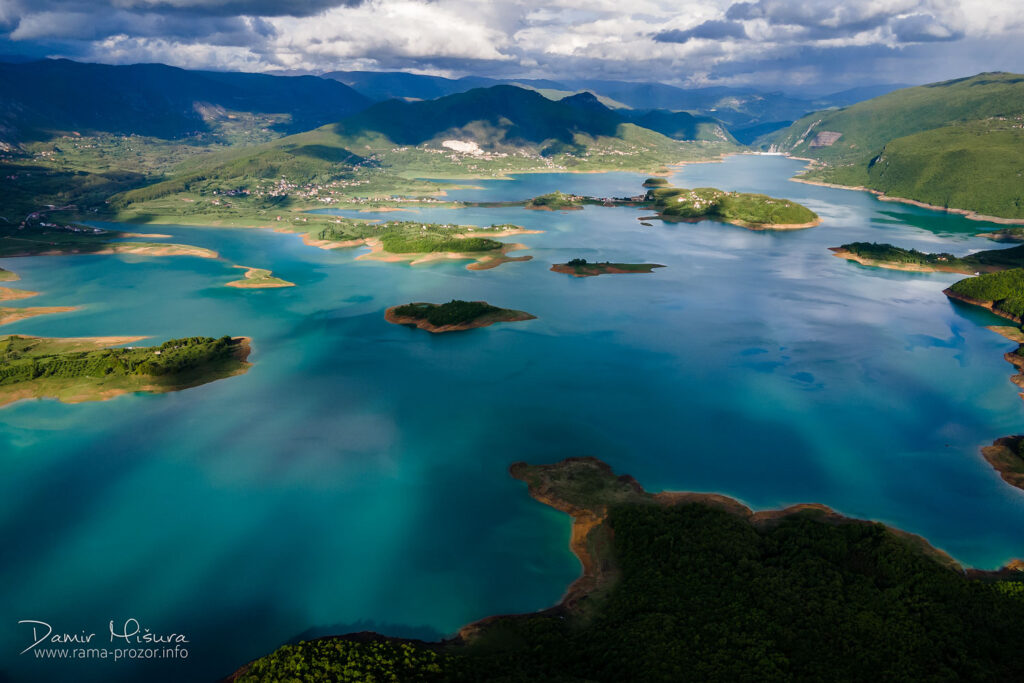
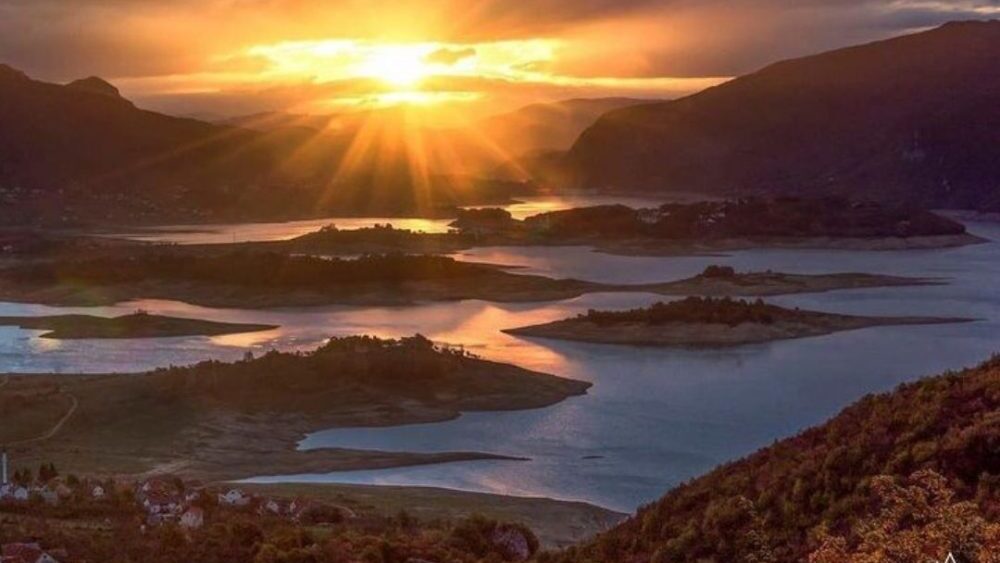
We’ve written about Ramsko Lake before and we’ll write about it again, because it deserves the repetition. It’s an artificial lake created by a dam in the 1960s, which sounds underwhelming until you see it: turquoise water, surrounded by the kind of dramatic mountain ridges that make Switzerland feel slightly try-hard, with a small inhabited island in the middle that has a Franciscan monastery on it.
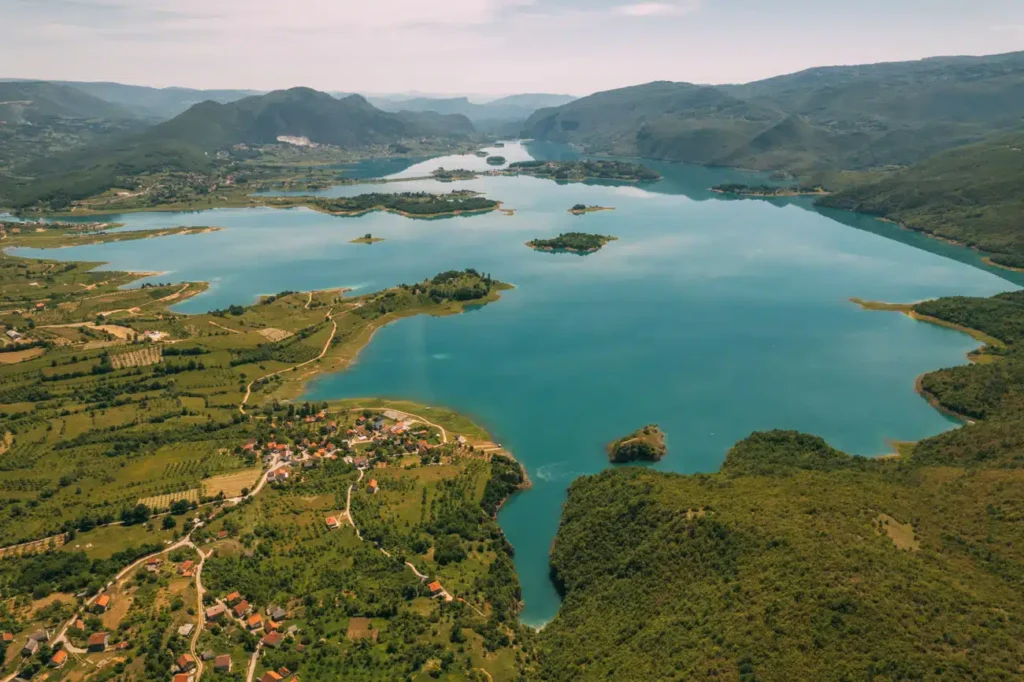
The swimming here is calm, the water in summer is gentle, and there are several spots around the shore where you can settle in for the afternoon. Less famous than the bigger lakes but quietly one of the prettiest places in the country.
Jablaničko Lake (Between Konjic and Jablanica)
Jablaničko is enormous. Thirteen square kilometres of artificial lake stretching through the mountains, formed by a hydroelectric dam, and according to British travel outlet Beach Atlas, home to one of the 100 best beaches in the world. Which is a slightly surreal thing to say about a lake in landlocked-except-for-a-bit central Bosnia, but here we are.
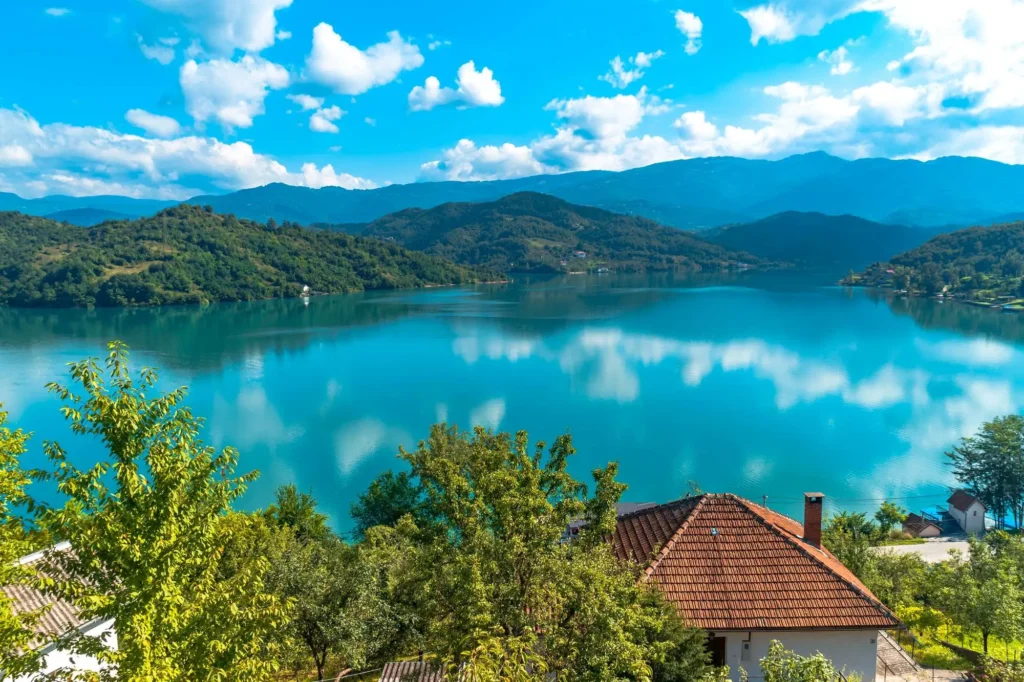
You can swim, camp, rent cottages, eat fish that was alive an hour ago in one of the lakeside restaurants, and generally exist in a state of low-grade contentment for several days. The main road from Sarajevo to Mostar runs along the lake, which means you can stop on the drive and turn what was supposed to be a two-hour transit into a five-hour discovery of why you should slow down.
If you want to go beyond just stopping for a quick swim and actually experience Jablaničko Lake and the Neretva Canyon properly, this kayaking and climbing tour turns it into a full adventure instead of just a scenic drive interruption. You can book it here: Jablanica Neretva canyon kayaking & climbing tour
Pannonian Lakes (Tuzla)
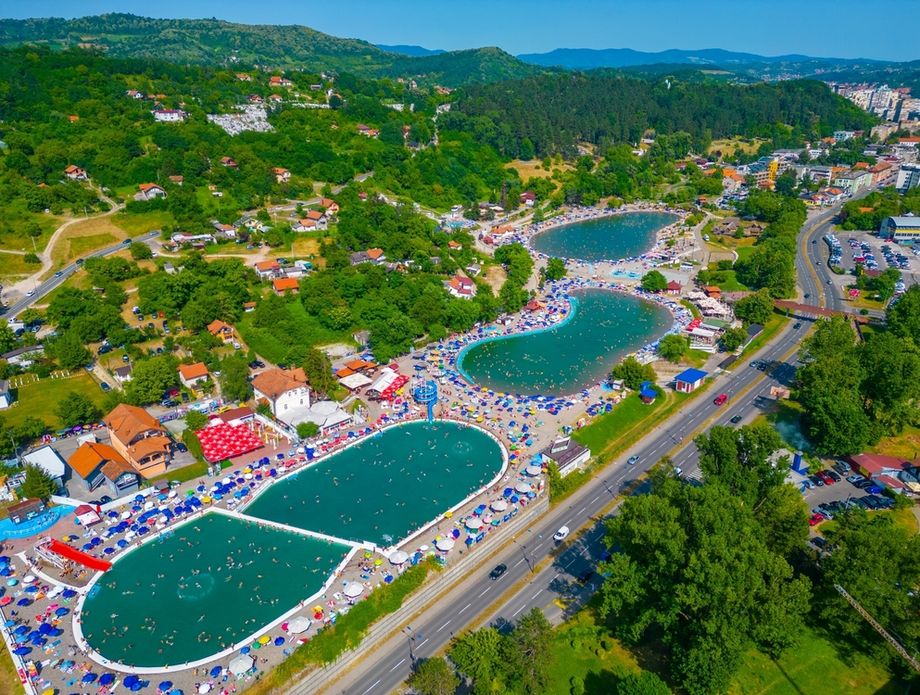
This one’s strange and worth including for that reason alone. The Pannonian Lakes are in the centre of Tuzla, which is a city in northern Bosnia, and they are the only saltwater lakes in continental Europe. The salt content comes from underground deposits that have made Tuzla a salt-mining town for literally thousands of years (the name “Tuzla” actually comes from the Turkish word tuz, meaning salt).
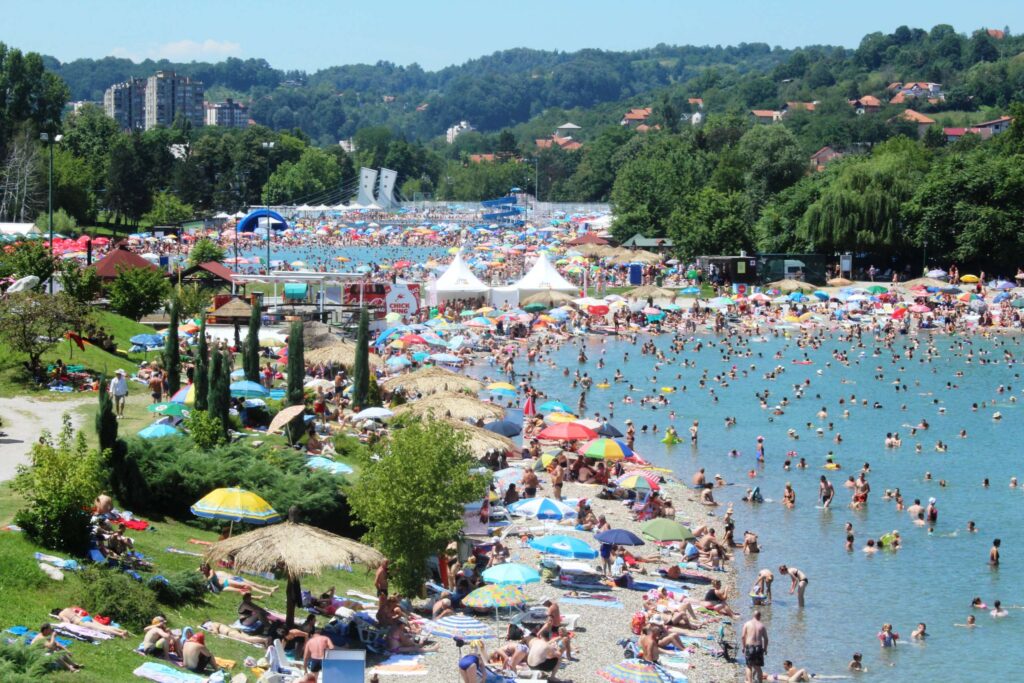
The lakes were built in 2003 on the site of old saltworks and they include beaches, slides, fountains, and the slightly bizarre experience of floating in salt water in the middle of a continental European city. Worth a stop if you’re passing through Tuzla, especially with kids.
If you want to experience Bosnia through its medieval heritage, from old fortresses to landscapes that still feel shaped by forgotten kingdoms, this tour is an easy way to step straight into that history without worrying about the logistics. You can book it here: Bosnian castles tour with lunch & drone video
Practical Advice for Wild Swimming in Bosnia
A few things that will make this much more enjoyable:
Bring water shoes. Bosnian rivers run over karst limestone and the rocks are sharp, slippery, and uninterested in your comfort. Cheap water shoes from any supermarket will change your life.
Don’t swim alone in unfamiliar rivers. Currents in mountain rivers can be deceptive. The water looks calm. The water is not calm. Get local advice on which sections are safe.
Check the water level after heavy rain. Karst rivers respond fast to rainfall and what was a gentle swimming hole yesterday can be a serious current today.
Bring a towel and a change of clothes. This sounds obvious until you find yourself two hours from your accommodation, dripping wet, and questioning your life choices in a parking lot.
Best months: Mid-June through mid-September for the rivers. May to October for the lakes (with August being the warmest). The shoulder months are quieter and the light is better, but the water is properly cold.
You will not need a permit for most spots. Bosnia is wonderfully unbureaucratic about swimming. Just don’t be the person who leaves rubbish behind. The locals don’t, and they won’t appreciate you doing it.
One Last Thing
Wild swimming in Bosnia isn’t really a wellness activity. It’s not about cold immersion therapy or biohacking your cortisol or whatever Instagram has decided this year. It’s about being in water that’s been flowing through the same karst limestone for several million years, in a country that’s quietly one of the wettest, wildest, and most underrated places in Europe.
You get in. You get cold. You get out. You eat something locally absurd, like a plate of grilled trout that was alive an hour ago. You watch the mountains do nothing in particular and you stop checking your phone. That’s the experience.
You’ll come home and remember the temperature of the water before you remember anything else. That’s the point.
Planning your Bosnia adventure? Check out our 7-Day Bosnia Road Trip Itinerary for a route that hits most of these spots, and our Una National Park Guide if you’re heading northwest. And before you go anywhere, sort your rental through DiscoverCars — most of these swimming spots are not exactly on the bus route.