Published under: Destinations
Picture this. You’re in Bosnia, roughly 150 kilometres from the nearest stretch of coast, standing in the middle of a city, and you decide to go for a swim in salt water. Not a pool that someone dumped a bag of salt into. Actual salt water, the same salinity as the sea, in three lakes sitting right in the town centre.
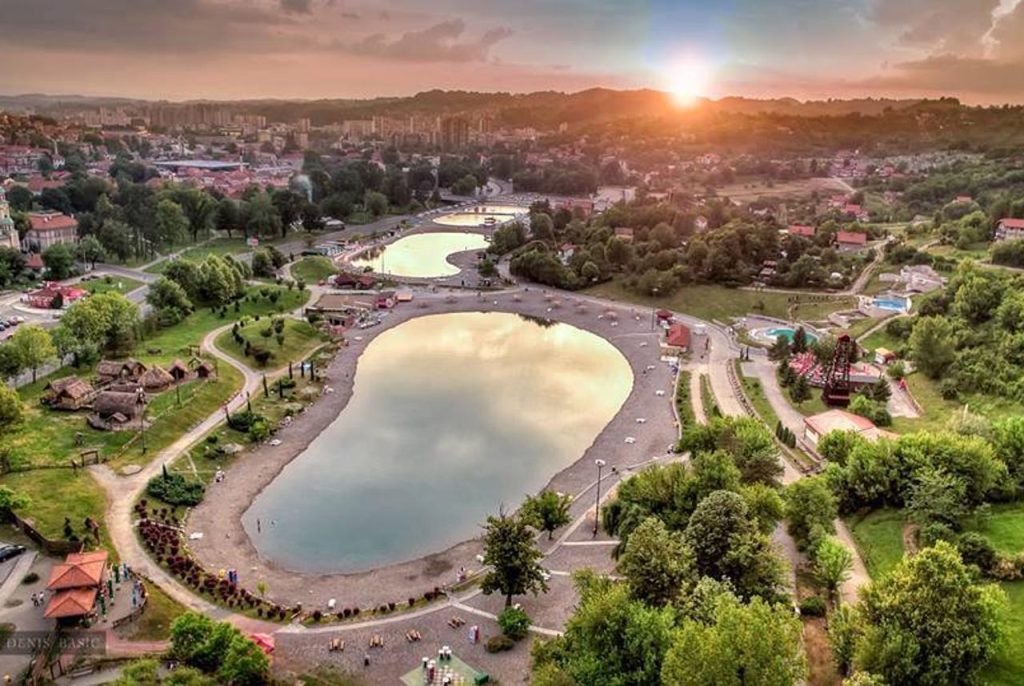
This is Tuzla, and it is doing something that no other city in Europe does. The Tuzla salt lakes are unlike anything else on the continent.
Yes, Bosnia has a coastline. It’s about 20 kilometres long, it lives in a town called Neum, and the whole country is quietly proud of it. But Tuzla is nowhere near Neum. Tuzla is up in the northeast, landlocked in every practical sense, and it has decided that the lack of a nearby sea is no reason to skip a beach day. So it built its own.
Welcome to the strangest and most charming beach in the Balkans.
The Tuzla Salt Lakes That Shouldn’t Exist
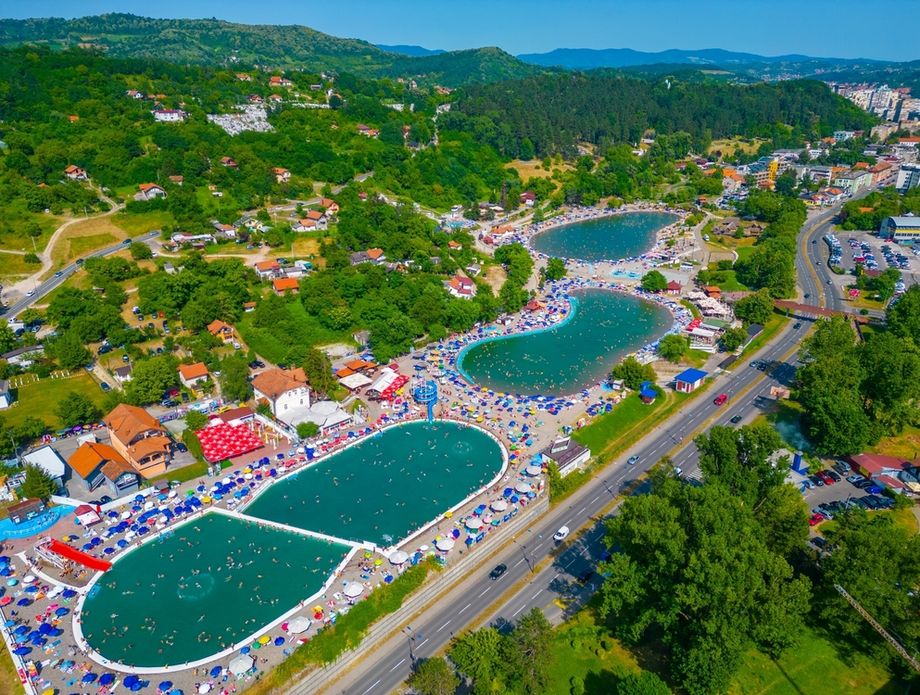
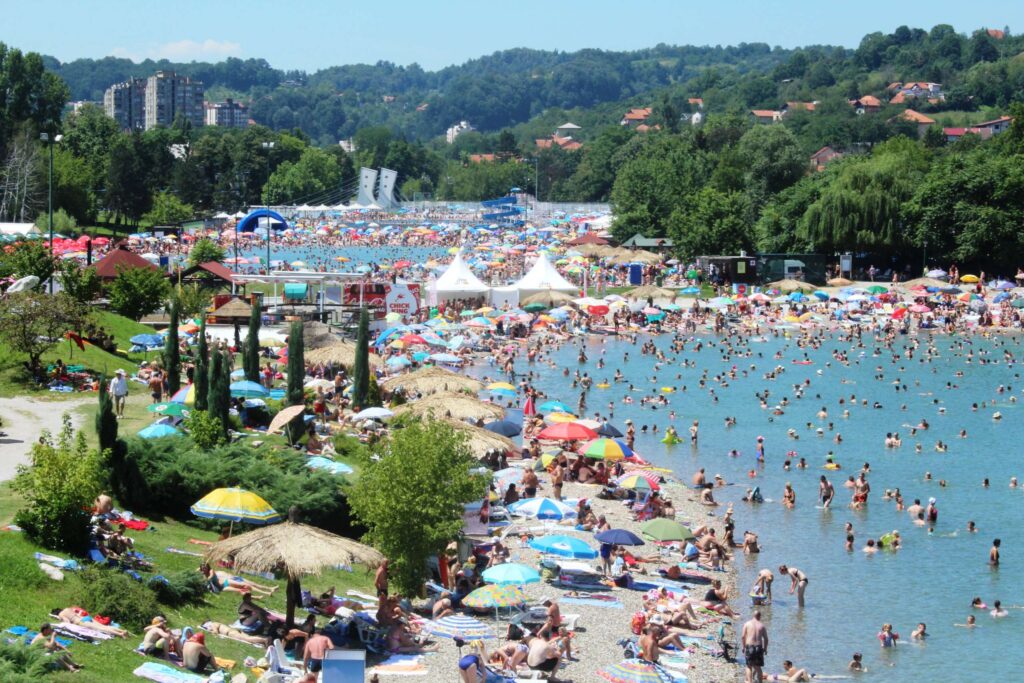
The Panonska jezera, or Pannonian Lakes, are the reason to come to Tuzla, and they are genuinely one of a kind. These are the only salt lakes in Europe, and Tuzla is the only city on the planet where the salt lakes, the beach, and the swimming are all located smack in the middle of the city. You can finish a coffee downtown and be floating in salt water ten minutes later.
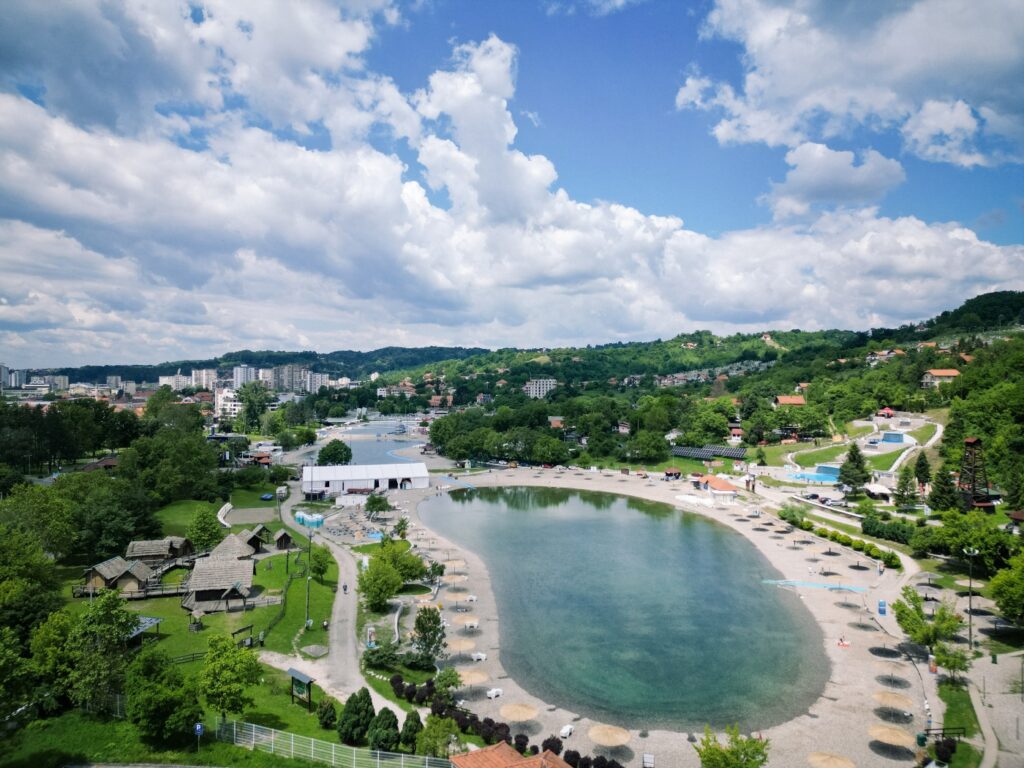
The water isn’t imported or faked. It’s pumped up from underground deposits of salt water that sit beneath the city, and it carries a salinity of 30 to 40 grams per litre. For reference, that’s essentially the same as seawater. You float the same way you would in the sea, you taste the salt when it inevitably gets in your mouth, and your skin does that tight, clean thing afterwards that tells you the water meant business.
The complex covers around 75,000 square metres and includes three separate lakes of different sizes and depths, plus a feature called the Slani slapovi, or Salt Waterfalls, which is a set of five cascades feeding two pools. There’s a thousand metres of beach, a children’s play area, sports courts, and enough cafes and restaurants that you never have to venture far for a cold drink and something grilled.
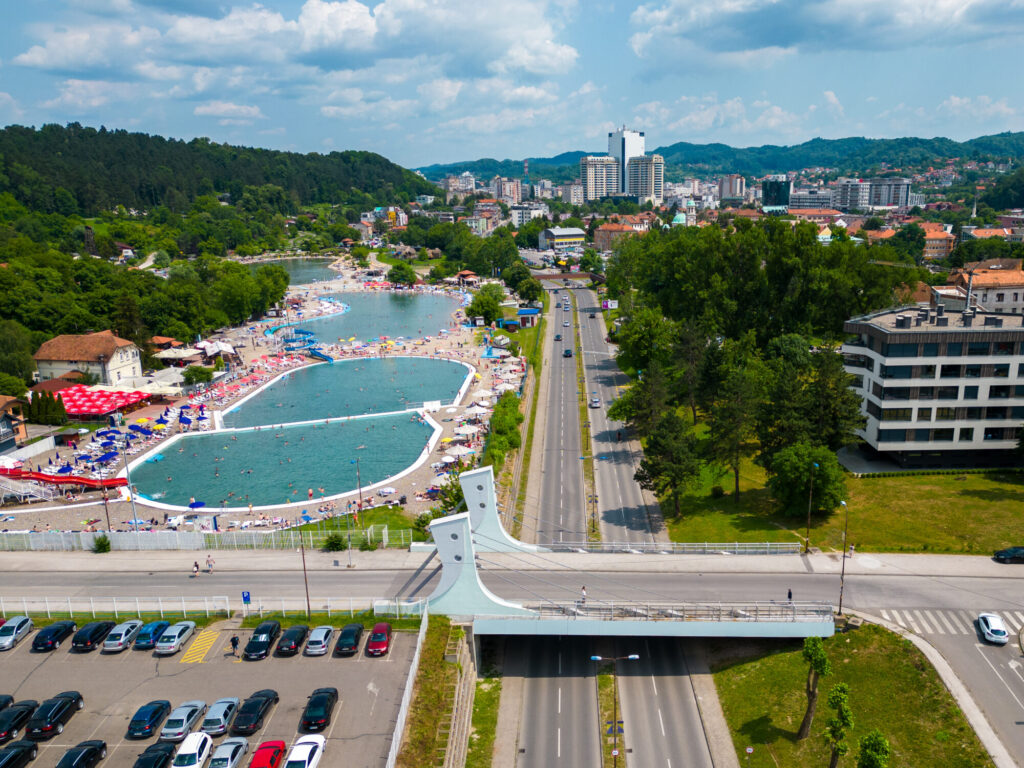
Best of all, it’s cheap. Entry has historically cost only a few marks, which means a full beach day in Tuzla costs less than a single fancy coffee in most European capitals. This is a place built for locals first and tourists second, and the pricing reflects that.
Why There’s Salt Under a City in the First Place
To understand Tuzla, you have to understand that the whole place is basically built on salt, and has been trading on it for a very long time.
The name Tuzla comes from the Turkish word “tuz”, which means salt. That’s not a coincidence or a cute origin story. The city has been extracting salt here since Roman times, which makes it one of the oldest continuous salt-producing sites in Europe. Millions of years ago, when the ancient Pannonian Sea retreated from this part of the continent, it left behind millions of tonnes of rock salt and salt water buried beneath the ground. The city has been pulling that salt back up out of the earth ever since.
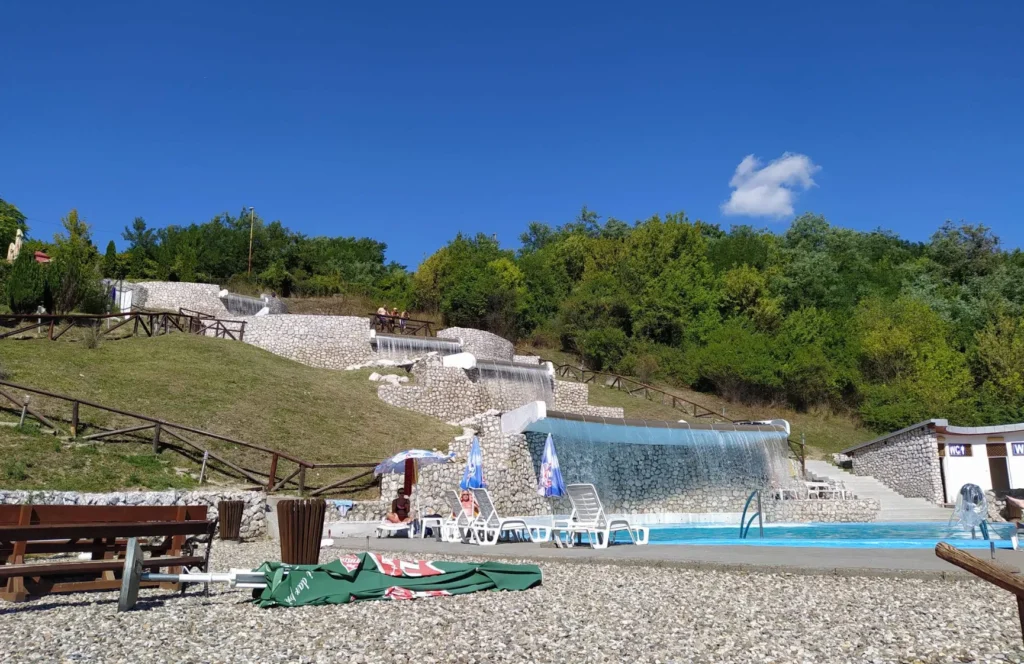
Here’s the twist that makes the whole thing satisfying. For most of the twentieth century, all that salt extraction was quietly wrecking the city. Decades of uncontrolled pumping caused the ground to subside, and entire neighbourhoods near the centre sank and had to be abandoned. The thing that made Tuzla rich was also swallowing it whole.
Then, in 2003, someone had the good sense to look at this ruined, waterlogged patch of central Tuzla and think: what if the salt water that caused all this became the solution instead of the problem? The first lake opened that year. The archaeological park followed in 2006, the second lake and the waterfalls in 2008, and the third lake in 2012. A liability became the city’s proudest attraction. It’s the kind of comeback story urban planners dream about.
The world noticed, too. In 2012 the project won a UNWTO Ulysses Award, one of the top honours the United Nations World Tourism Organization hands out, specifically for innovation in tourism. When the UN gives your salt lakes an award, you’re doing something right.
It’s Also Good For You, Apparently
The salt water isn’t just fun to float in. It has genuine therapeutic properties, and this isn’t a recent marketing invention.
The mineral-rich water is used to help with rheumatic conditions, respiratory problems, and various other ailments, and the tradition of health tourism here goes all the way back to the Austro-Hungarian period, when a spa called Slana banja was built to take advantage of exactly these properties. So while you’re bobbing around in the lake feeling smug about your clever off-season beach trip, you’re also technically doing something good for your joints. Multitasking at its finest.
The Tuzla salt lakes draw somewhere between 300,000 and 400,000 visitors during the summer season, and in their first fifteen years they welcomed more than 3.7 million people. A lot of them come from Croatia and Serbia, where people have worked out that Tuzla offers a faster and cheaper cool-off than the crowded Adriatic. The secret is very much out among the neighbours. It just hasn’t fully reached everyone else yet, which is exactly why you should go now.
Beyond the Beach: The Rest of Tuzla
If you can drag yourself out of the water, the city itself rewards a wander. Tuzla grew up around three historic points, and the old centre is walkable, lively, and full of the kind of narrow streets that reward aimless strolling.
Start at the Soni trg, the Salt Square, which is the historic heart of the city. There’s been a salt well here since 1476, and the restored version, reopened in 2004, sits alongside a replica of a Neolithic salt-evaporation vessel and a fountain decorated with a mosaic from Ravenna, the Italian capital of mosaic art. It’s a small square doing a lot of quiet historical heavy lifting.
Over on the main Trg slobode, or Freedom Square, look for the elegant building known as Barok, built in 1900. Here’s a fun piece of trivia: the whole building went up for one reason, which was that Archduke Franz Ferdinand was expected to visit, and the city wanted somewhere suitably grand for him and his wife Sophie to stay. History buffs will recognise that particular royal couple, and know that things did not end well for them a few years later in Sarajevo.
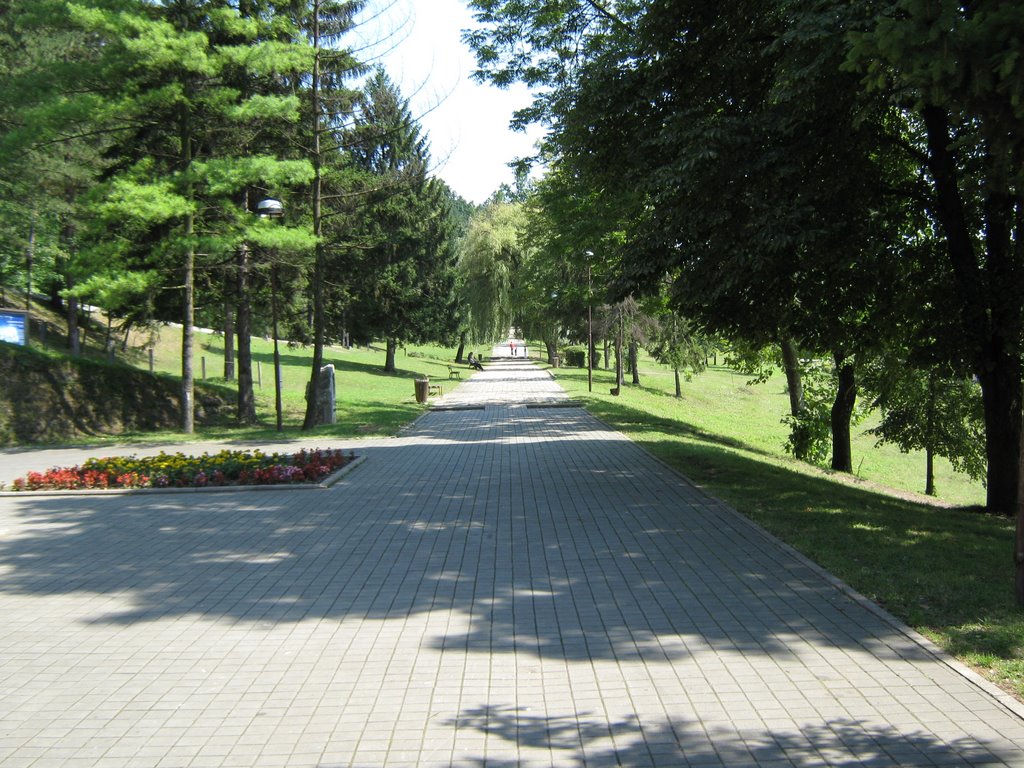
For a break from the sun, climb up to Slana Banja, a large green park and recreation complex just above the lakes. It’s one of the biggest and best-kept central parks in the country, threaded with walking trails and dotted with old stone monuments. The walk up from the centre takes about fifteen minutes and gives you a proper view back over the city and the lakes.
While you’re wandering, you’ll probably end up somewhere the locals call “kod Meše i Ismeta”, meaning “at Meša and Ismet’s”. These are statues of the writer Meša Selimović, who wrote the celebrated novel “Death and the Dervish”, and the painter Ismet Mujezinović, both proud sons of Tuzla. The statues have become the city’s default meeting point. If a Tuzlak tells you to meet them there, now you’ll know where to go.
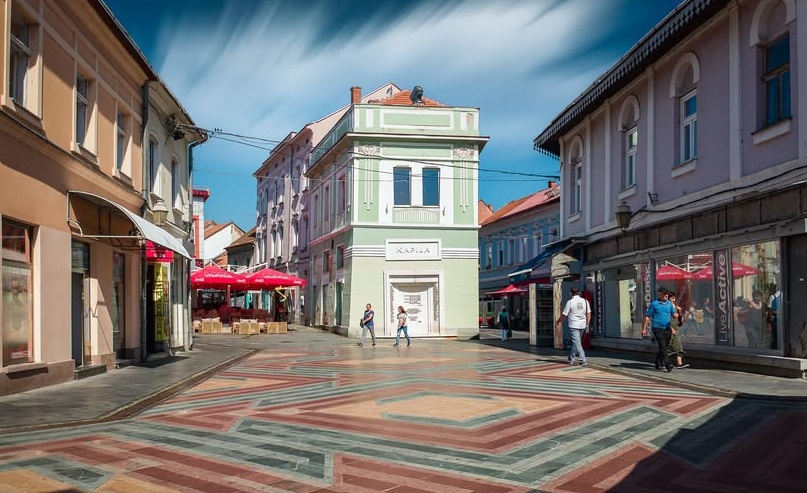
One place asks for a quieter moment. Kapija, the gate area in the centre, holds a memorial to the young people of Tuzla killed here in a 1995 massacre during the war. It’s a place locals hold close, and it’s worth pausing there with the respect it deserves.
Day Trips Around Tuzla
If you build in an extra day or two, the surrounding region has more to offer.
Lake Modrac is the big one, a large reservoir created in 1964 that stretches around 11 kilometres and covers some 17 square kilometres. It’s popular for fishing, water sports, and lazy afternoons by the water, and it works best when you go with no grand plans and just enjoy the calm.
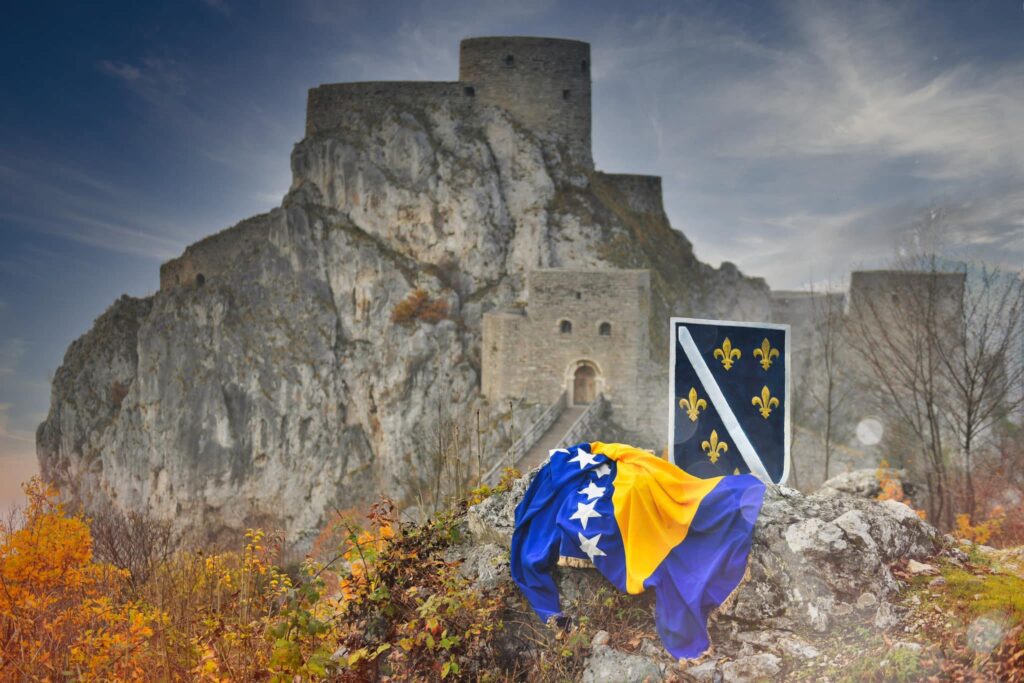
For something with more drama, head to the Srebrenik Fortress, a medieval castle perched on a rock just east of the town of Srebrenik. It’s one of the best-preserved old fortresses in Bosnia, wrapped in local legends, and the views from up top are worth the trip on their own. Here you can book a trip with a guide to visit Srebrenik Fortress.
And if you want mountains and forest, Konjuh delivers, with the Zlaća resort, the year-round spring at Muška voda, hidden caves, and enough fresh air to reset your city-tired lungs. The wider region is also laced with rivers clean enough that rafting in Bosnia has quietly become one of its best adventures.
How to Get to Tuzla
Here’s Tuzla’s other trick: it has its own international airport. Tuzla Airport (TZL) is a base for Wizz Air, with direct budget flights connecting the city to a long list of destinations in Germany, Sweden, France, and Switzerland. That makes Tuzla one of the few Bosnian cities you can fly into directly, rather than reaching it by bus from Sarajevo.
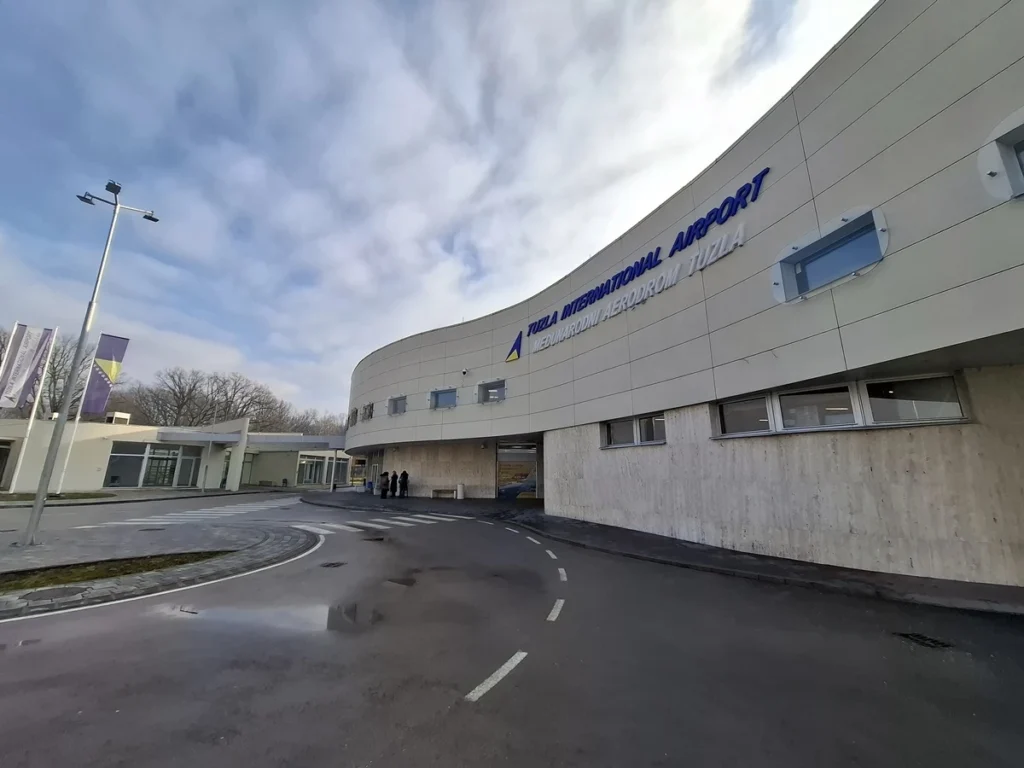
If you’re already in Bosnia, Tuzla is well connected by road, roughly two to three hours from Sarajevo and reachable by regular bus. For the full breakdown of flights and entry rules, see our guide on how to get to Bosnia.
The Verdict
Tuzla is not going to compete with Mostar’s bridge or Sarajevo’s old bazaar for your Instagram feed, and it isn’t trying to. What it offers instead is genuinely unique: a beach day in a landlocked northeastern city, in salt water pulled from beneath a place named after salt, at a price that feels like a clerical error in your favour.
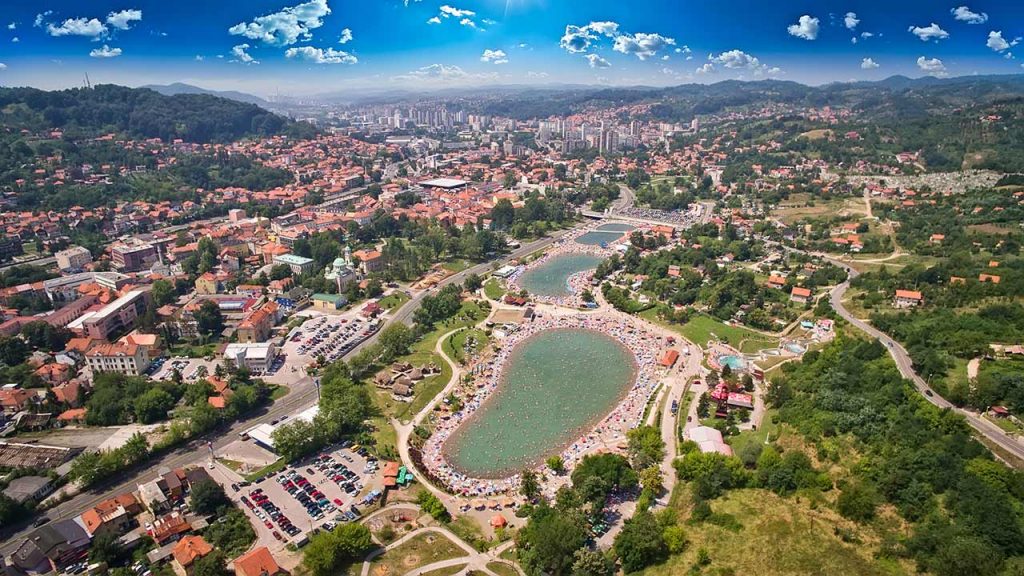
The Tuzla salt lakes are the kind of destination that makes people say “wait, it has what?” and then quietly add it to the itinerary. Come for the novelty of swimming in the sea 150 kilometres from the actual sea. Stay for a city that turned its biggest problem into its best idea.
Bosnia has a coast at Neum. Tuzla just decided it didn’t need one.
Frequently Asked Questions
Are the Tuzla salt lakes real salt water? Yes. The water is pumped from underground salt deposits beneath the city and has a salinity of 30 to 40 grams per litre, which is essentially the same as seawater.
Can you swim in the Tuzla salt lakes? Yes. The lakes are a public swimming complex with beaches, open during the summer season. The wider complex, including the archaeological park and museum, is open year-round.
Why does Tuzla have salt lakes? Tuzla sits on ancient salt deposits left behind by the Pannonian Sea millions of years ago. The lakes were built between 2003 and 2012 using naturally occurring salt water drawn from beneath the city.
How much does it cost to visit the Tuzla salt lakes? Entry has historically cost only a few Bosnian marks, making it one of the most affordable beach days anywhere in Europe.
How do you get to Tuzla? Tuzla has its own international airport (TZL), a Wizz Air base with direct flights from Germany, Sweden, France, and Switzerland. It’s also about two to three hours by road from Sarajevo.
Planning your route through the north? Pair Tuzla with our 7-Day Bosnia Road Trip Itinerary and check out how to get to Bosnia to sort your flights before you go.