
Tuzla Itinerary: 4 Unforgettable Days in Northeast Bosnia
Salt lakes, medieval fortresses, the Drina Valley and places most travellers never hear about before arriving in Bosnia.
For many travellers, a Tuzla itinerary begins at Tuzla Airport and ends with a quick search for the fastest road to Sarajevo. That is understandable, but it is also a fine way to miss one of Bosnia and Herzegovina’s most varied corners. Northeast Bosnia packs salt water, medieval stone, river landscapes and some of the country’s most important places of memory into distances that look deceptively small on a map.
Tuzla is the natural base. It has swimmable salt lakes in the middle of a landlocked city, a lively pedestrian centre and enough cafés to make a hurried schedule feel mildly offensive. From here, you can drive west to the fortresses of Srebrenik and Gradačac, east to the Drina and Kušlat Mosque, and then dedicate a full day to Potočari and Srebrenica.
This four-day route is designed for travellers with a car who want more than a list of landmarks. The drives are not long, but Bosnian roads, coffee breaks and unexpected viewpoints have their own opinions about time. Treat the schedule as a useful structure, not a military operation, and always check current road conditions and opening hours before setting out.
The mood also changes across the itinerary. Days one to three are about landscapes, history and everyday life; day four asks for more attention and restraint. That contrast is part of understanding this region, and it is one reason the route deserves four full days rather than a rushed loop between airport and motorway.
Before You Start the Road Trip
Use Tuzla as your base for at least three nights, adding a fourth if you plan to return after Srebrenica rather than continue elsewhere. Staying near the centre makes the first day completely walkable and gives you an easy choice of restaurants in the evening. If you fly into Tuzla Airport, collect your rental car on arrival or arrange it for the morning of day two; you will not need it while exploring the city itself.
The main roads on this route are paved, but driving times are shaped by curves, villages, trucks and occasional roadworks. A short-looking distance can take longer than the navigation estimate, especially east of Tuzla. Download offline maps, keep some cash for small cafés and parking, and refuel before heading toward Kušlat or Potočari. Mobile coverage is generally useful, but it should not be your only plan in a rural valley.
Late spring through early autumn offers the easiest conditions. The Pannonian Lakes are at their best during the summer bathing season, while the fortress climbs are more comfortable in May, June, September and early October. Winter travel is possible, but snow, ice and shorter daylight can change access to exposed sites. Whatever the month, start early on days three and four and avoid turning the return drive into a race after dark.
This itinerary works independently, but a guided visit can add valuable context at the Srebrenica Memorial Center. It is also worth asking locally about access to Kula Grad and Kušlat, where conditions are less formal than at a city museum. A little preparation keeps the practical details in the background, where they belong, and leaves more attention for the places themselves.
Day 1 Tuzla Salt Lakes Old Streets and Coffee That Takes Its Time
| ROUTE Soni Trg → Trg Slobode → Korzo → Tuzla Salt Lakes → Slana Banja → Kapija → dinner |
Morning in the city of salt
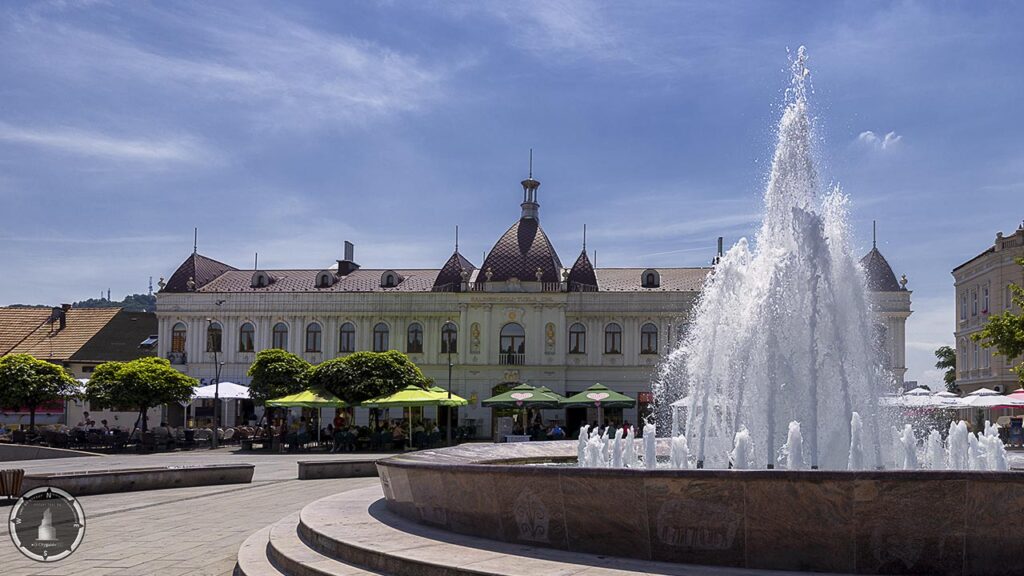
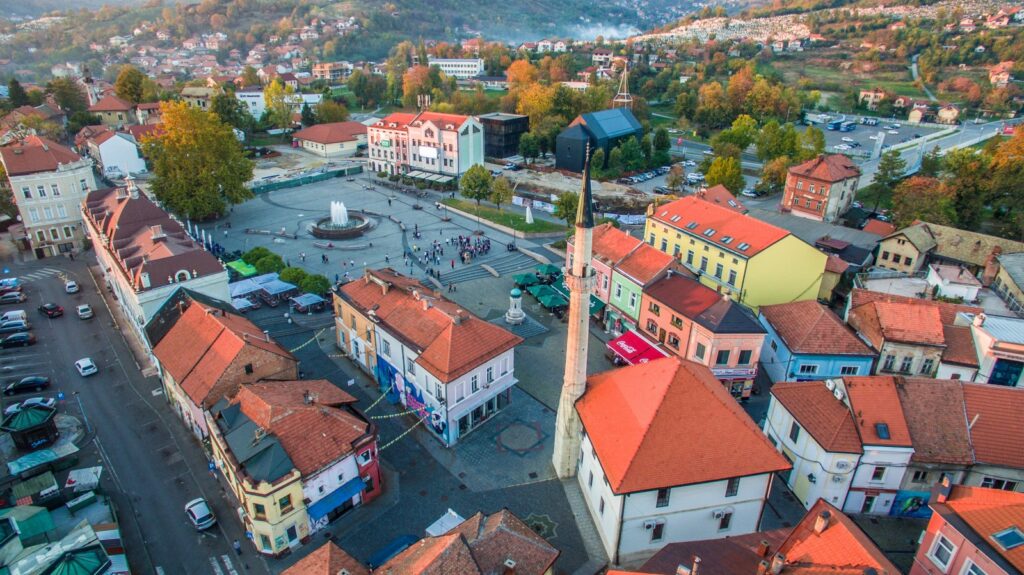
Start at Soni Trg, the Salt Square, where Tuzla explains itself before you have finished your first coffee. Salt has shaped the city for centuries, and archaeological finds point to salt extraction here as far back as the Neolithic period. Even the name Tuzla comes from the Turkish word for salt, so this is not a modern branding exercise dreamed up by a tourism office; the mineral is written into the city’s identity.
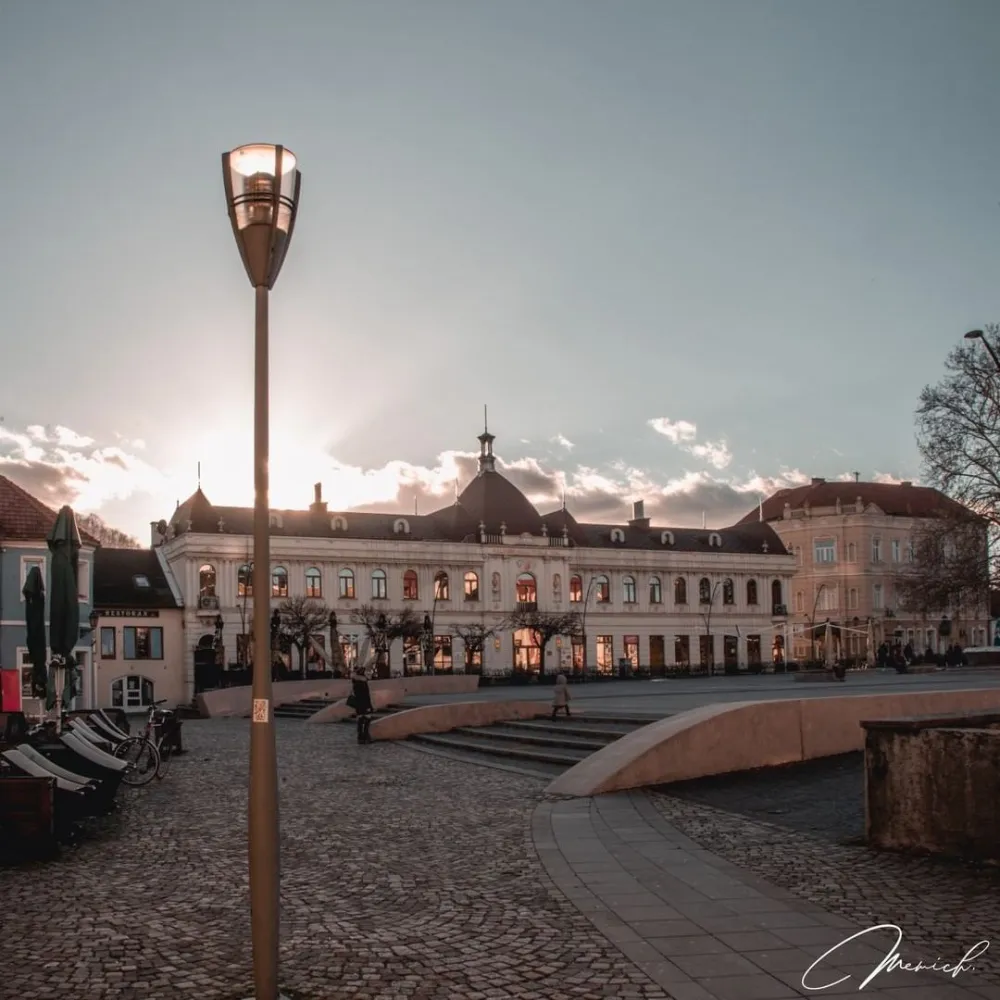
From Soni Trg, walk a few minutes to Trg Slobode, the broad central square framed by cafés and Austro-Hungarian façades. Then follow Korzo, Tuzla’s pedestrian spine, and watch the morning settle into its normal rhythm. Order Bosnian coffee if you have time, which you do, and resist treating it like an espresso shot. Coffee here is less a beverage than a small agreement to stop pretending you are in a hurry.
Midday at the Tuzla Salt Lakes
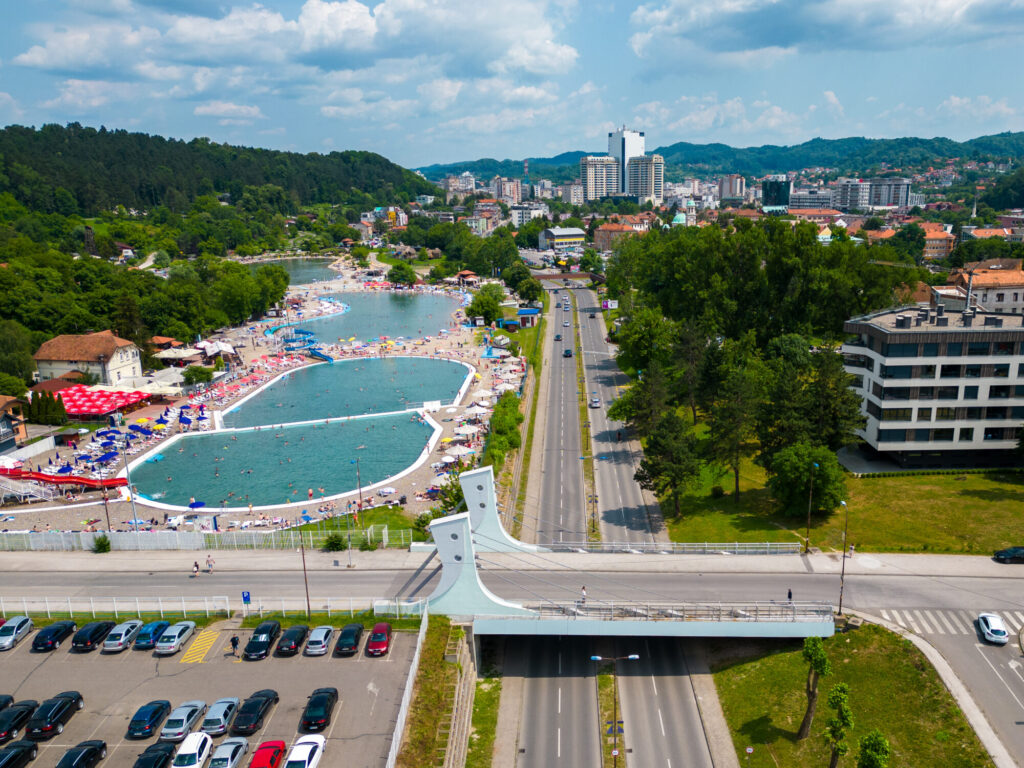
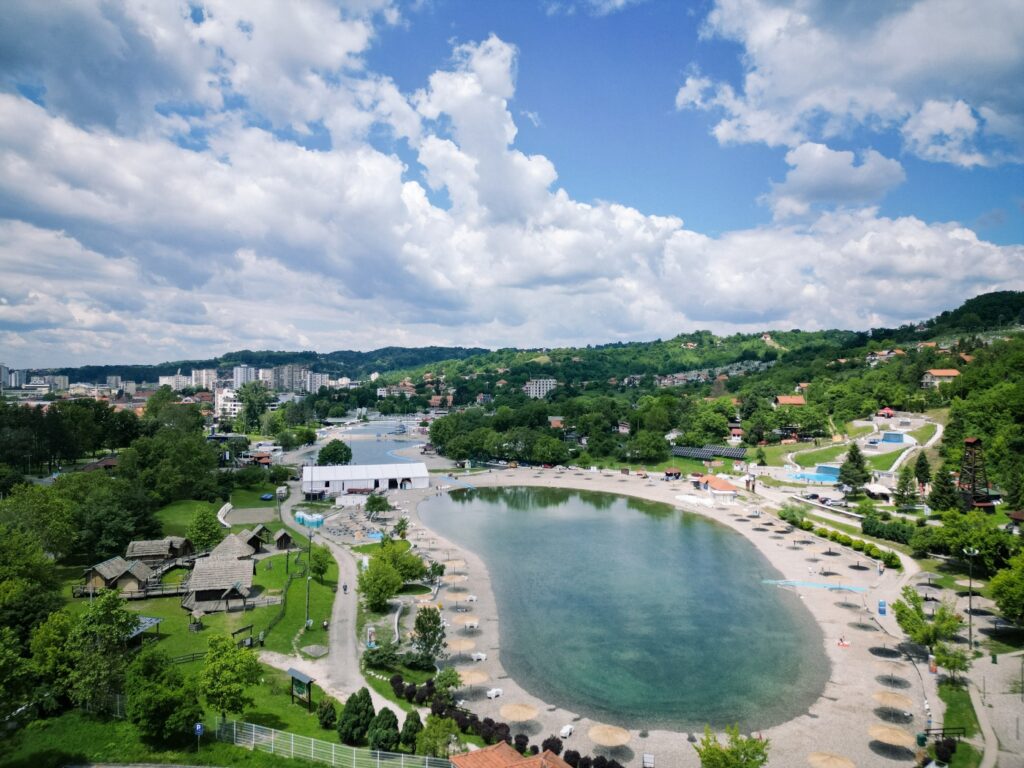
By late morning, continue to the Pannonian Lakes, usually called the Tuzla Salt Lakes by international visitors. The complex contains three artificial lakes filled with a mixture of water and natural brine drawn from beneath the city. The first lake opened in 2003, turning Tuzla’s long and sometimes difficult relationship with underground salt into one of its most enjoyable public spaces. For practical details, seasonal advice and what to bring, see our complete guide to the Tuzla Salt Lakes.
In summer, allow two or three hours for swimming and a slow lunch nearby. Outside the main bathing season, the lakes are still worth seeing as part of a walk through the city, although access and facilities can be limited. Check current opening information before arriving; the idea of a beach in Tuzla is unusual enough without discovering it only from the wrong side of a locked gate.
Slana Banja and Kapija
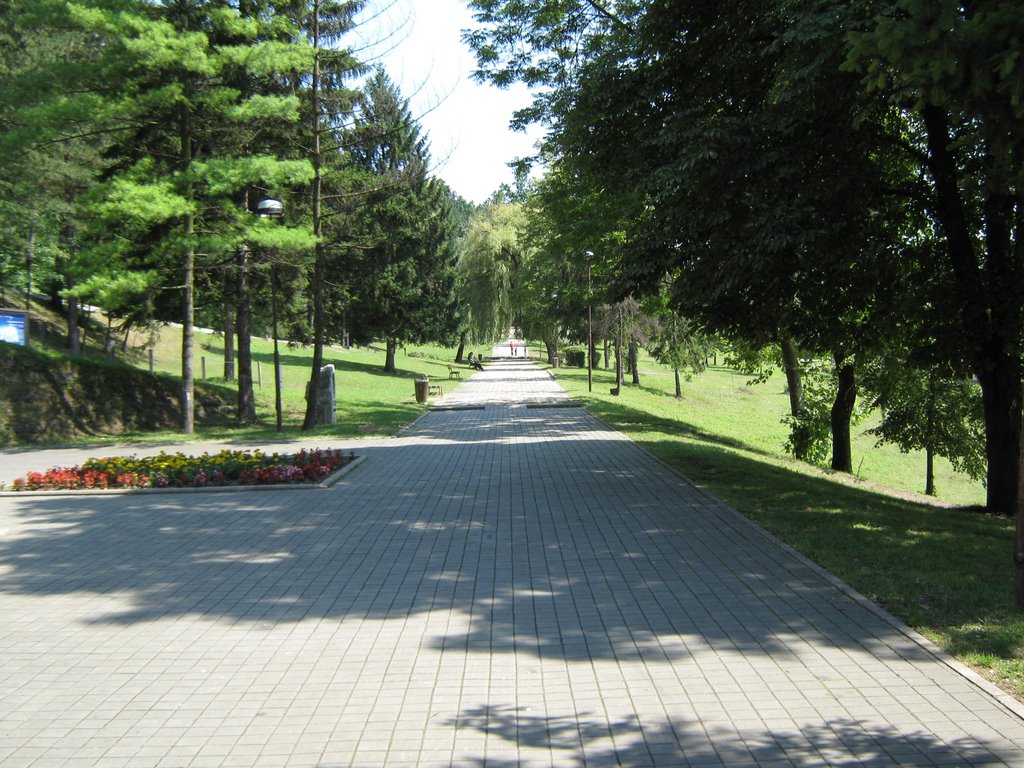
Later in the afternoon, walk through Slana Banja, the green memorial park above the centre. Paths climb between trees, viewpoints and monuments, offering a quieter perspective on the city. It is a good place to slow down before returning toward Korzo, but it is not simply a recreational park; several memorials here speak to Tuzla’s wartime losses.
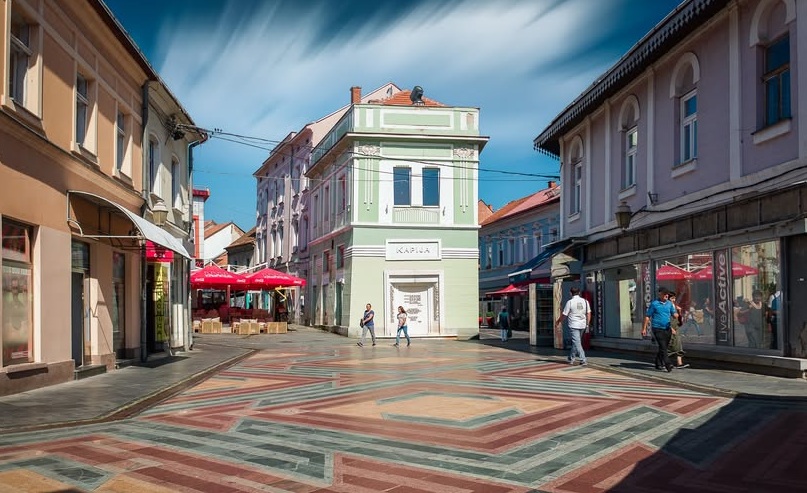
On the way back, stop at Kapija. On 25 May 1995, a shell fired by Bosnian Serb forces struck this meeting place in the city centre, killing 71 young people and wounding more than 170. The average age of those killed was 23. There is no special ritual required from a visitor—only time, quiet and respect. Read the names, avoid performative photographs and let the place remain what it is: part of the living memory of Tuzla.
End the day with dinner around the centre. Tuzla is compact enough that you do not need a complicated evening plan. Walk Korzo again, choose somewhere busy with locals and enjoy the fact that tomorrow’s road trip starts only after breakfast.
Day 2 Srebrenik and Gradačac Medieval Bosnia Meets the Dragon of Bosnia
| ROUTE Tuzla → Srebrenik Fortress → Gradačac Fortress → Tuzla |
Srebrenik Fortress

Leave Tuzla after breakfast and drive roughly 40 minutes north-west to Srebrenik Fortress. The road ends below a dramatic stone stronghold balanced on a rocky ridge, exactly where a medieval ruler would build if convenience were not part of the brief. Park beneath the fortress and continue uphill on foot; the final approach and narrow bridge create the view most people remember.
Srebrenik first appears in written records in 1333, during the rule of Bosnian Ban Stjepan II Kotromanić. Its position made it strategically valuable, and control shifted repeatedly as regional powers competed for northern Bosnia. Today, the remaining walls and towers are more atmospheric than polished. Wear shoes with grip, watch your step on uneven stone and allow 60 to 90 minutes for the climb, the interior and the views.
Opening arrangements can change, especially outside the busiest months, so check locally before relying on access to every part of the fortress. Even when the interior is limited, the setting alone makes Srebrenik one of the best short trips from Tuzla.
Gradačac and the Dragon of Bosnia

From Srebrenik, continue about 40 minutes to Gradačac. Its fortified complex developed mainly in the late eighteenth and early nineteenth centuries, and the white tower rising above town is inseparable from Husein-kapetan Gradaščević. Known as Zmaj od Bosne, the Dragon of Bosnia, he led the 1831 movement for Bosnian autonomy within the Ottoman Empire. He died in 1834 at only 31, but his name remains one of the most powerful in Bosnian historical memory.
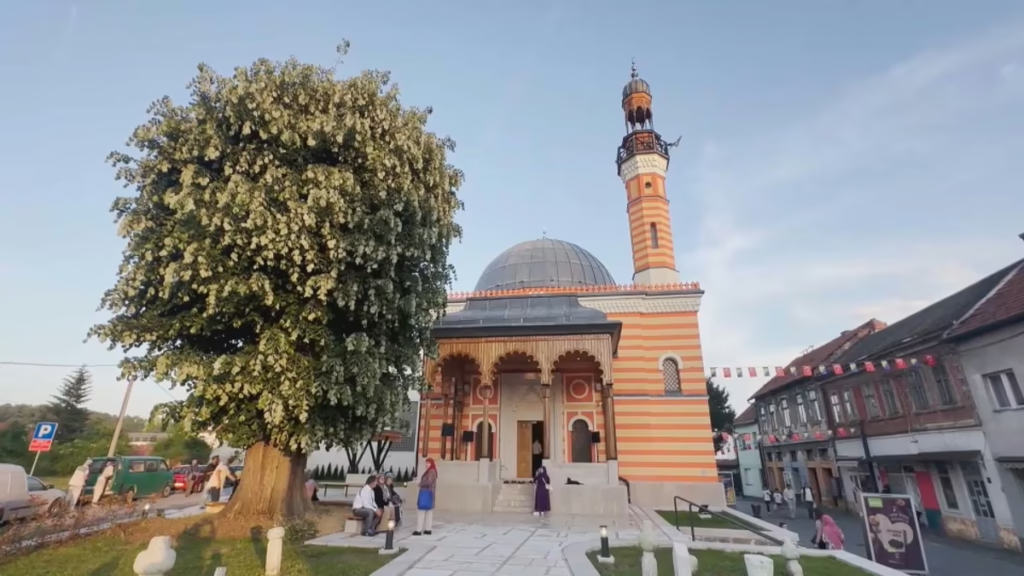
Explore the castle grounds, the clock tower and the surrounding old quarter, then visit the nearby Husejnija Mosque, built in 1826. It is an active place of worship, so dress modestly, avoid entering during prayer and follow any instructions at the entrance. The mosque’s elegant proportions and painted details make it an important part of the visit, not an optional footnote beneath the fortress.
Allow two or three hours in Gradačac, including lunch or coffee. The town is easy to experience on foot once you park near the centre, although there are slopes and cobbled sections. The drive back to Tuzla takes about an hour, leaving time for a relaxed evening before the itinerary turns east toward the Drina.
Day 3 Zvornik Divič and Kušlat The Drina and a Mosque on a Rock
| ROUTE Tuzla → Zvornik → Kula Grad → Divič → Kušlat Mosque → Tuzla |
Zvornik and Kula Grad

The drive from Tuzla to Zvornik usually takes 75 to 90 minutes. As you approach, the landscape narrows toward the Drina, one of Bosnia’s great rivers and, here, the border with Serbia. Mali Zvornik sits directly across the water. The distance between the two towns is small; the history carried by the river is not.
Above Zvornik, the fortress known as Kula Grad or Đurđev Grad spreads across Mount Mlađevac. Its core is medieval, with later rulers expanding and adapting the defences. This is a layered historic site rather than a carefully choreographed visitor attraction, which is part of its appeal but also a reason to arrive prepared. Access conditions may vary, paths can be rough and signage is limited, so ask locally about the best approach and do not follow a navigation shortcut simply because your phone sounds confident.
Allow 90 minutes to two hours if you plan to explore more than the lower viewpoints. Bring water and wear proper shoes. The reward is a broad view over Zvornik, the river and the lake, with the border visible as geography rather than an abstract line.
A quiet stop at Divič
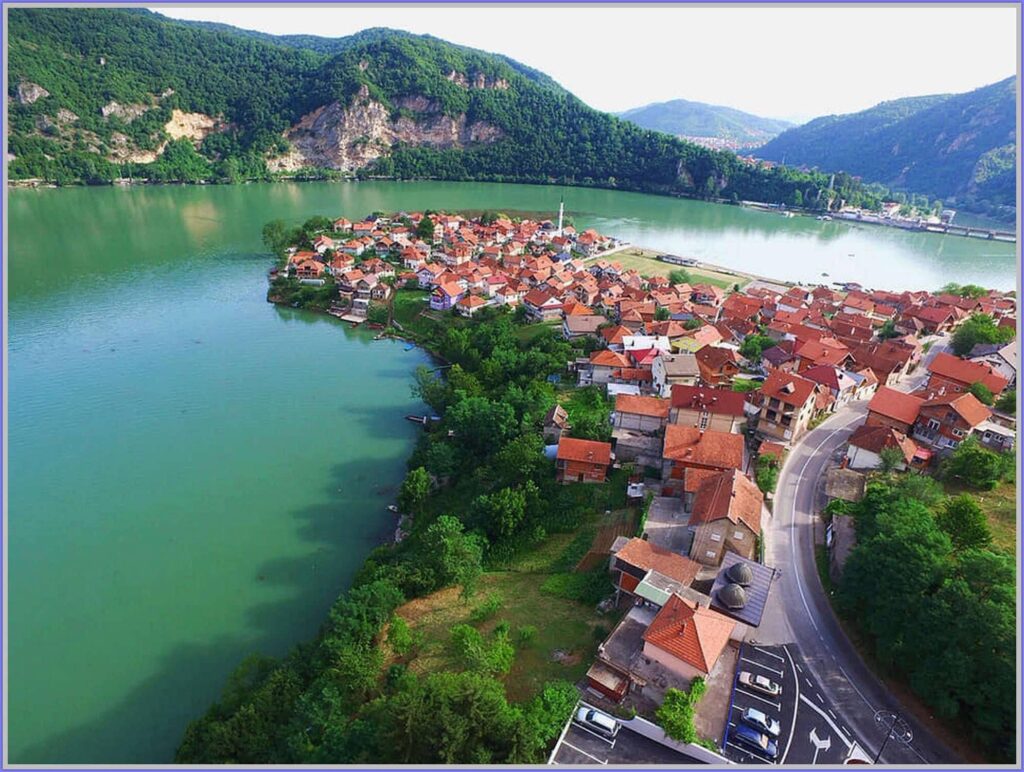
After the fortress, continue to Divič, a settlement on a peninsula beside Zvornik Lake. The lake was created after construction of the hydroelectric dam in the 1950s, reshaping the valley and the relationship between town and river. Divič is not a major attraction with a ticket office and a checklist. It is a place to stop for 30 to 60 minutes, look across the water and let the pace drop before the final climb of the day.
Kušlat Mosque
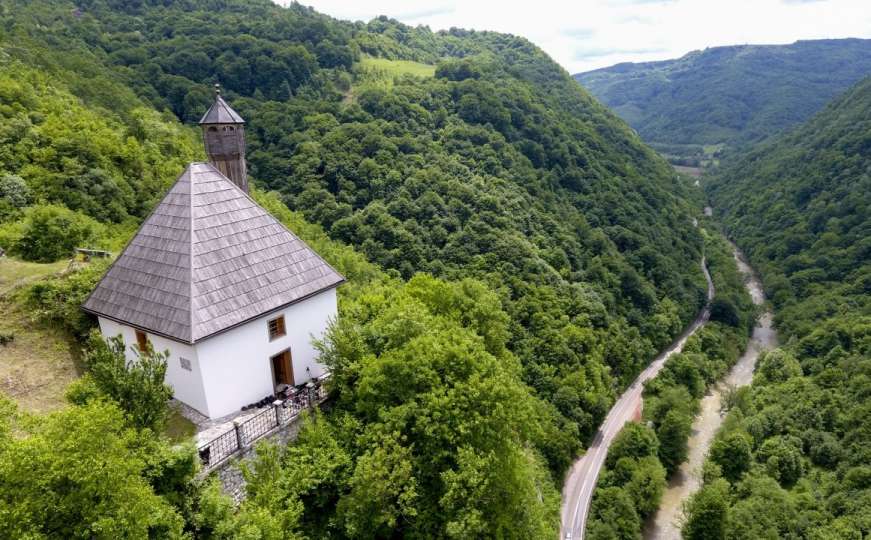
Drive south-west toward Kušlat, where a small mosque stands on an isolated rock above the confluence of the Jadar and Drinjača rivers. The medieval town of Kušlat is mentioned in fourteenth-century sources, while the mosque is generally associated with the early Ottoman period and the garrison that controlled this strategic point. Few buildings in Bosnia occupy a setting this improbable.
The mosque was destroyed in 1993 and rebuilt on its historic site, reopening in 2013. Reaching it requires a steep climb of roughly 30 minutes, depending on fitness and conditions. The trail can be slippery after rain, and gravity remains stubbornly undefeated, so bring water, wear shoes with grip and turn back if the weather makes the route unsafe.
Allow about 90 minutes for the climb, time at the top and the descent. The interior may be closed outside organised visits, but the journey and setting are the central experience. Kušlat is an active religious site, so dress modestly, keep noise low and avoid flying drones or taking intrusive photographs when worshippers are present. From the rock, the surrounding valleys seem to arrange themselves around the mosque; it is one of those places that explains why a map can never tell the whole story of a road trip.
Return to Tuzla in the late afternoon or early evening. Depending on traffic and stops, the drive can take around 90 minutes. Refuel before the next morning and keep day four deliberately clear of unrelated sightseeing.
Day 4 Potočari and Srebrenica A Day That Deserves Time
| ROUTE Tuzla → Srebrenica Memorial Center in Potočari → Srebrenica → Tuzla or onward travel |
Before you go
This is a different kind of travel day. Do not combine it with a hurried fortress stop or treat it as one more location to collect before lunch. The drive from Tuzla to Potočari generally takes between 90 minutes and two hours, so leave early, eat beforehand and give the visit the space it deserves.
The Srebrenica Memorial Center is in Potočari, around six kilometres north of Srebrenica, on the site of the former battery factory that served as the base of the Dutch UN battalion. In July 1995, Bosnian Serb forces overran the UN-declared safe area. More than 8,000 Bosniak men and boys were systematically murdered, while more than 25,000 women, children and elderly people were forcibly expelled. International courts have ruled that the crimes constituted genocide.
Visiting the Srebrenica Memorial Center
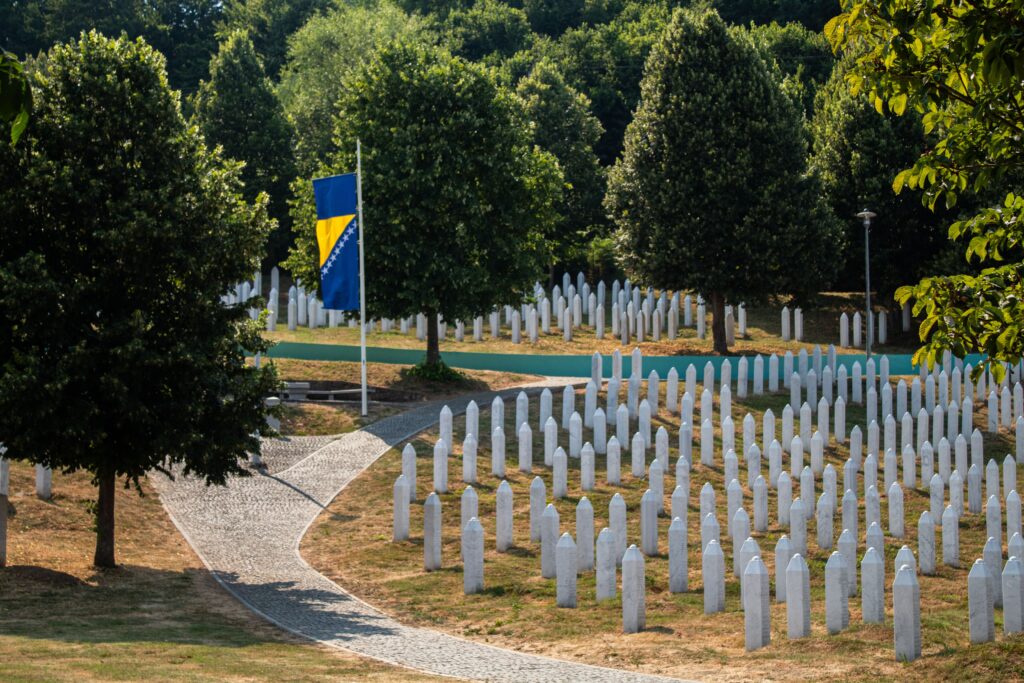
The visit includes the cemetery, memorial stone and exhibitions inside the former factory complex. New victims continue to be buried as remains are identified. Move quietly, dress respectfully and remember that this is both a memorial site and a cemetery visited by survivors and families. Photography is permitted in many areas, but discretion matters more than permission.
Allow at least three to four hours. At the time of writing, the Memorial Center lists daily visiting hours from 08:00 to 16:00, with free admission and guided visits available in Bosnian and English. Reservations are encouraged, particularly for groups. Because practical details can change, confirm them on the official Srebrenica Memorial Center website before travelling.
The exhibitions provide the context needed to understand what happened through testimony, documents, photographs and material evidence. Give those primary sources your attention. A short travel article can prepare you to arrive respectfully, but it cannot replace the voices preserved by the institution or the time required to listen to them.
Srebrenica today
After Potočari, continue into Srebrenica itself. The town is not an extension of a museum; people live, work and raise families here. A short walk through the centre, followed by coffee or a simple meal, helps hold two truths together: the past must be remembered accurately, and the present deserves to be seen without turning residents into exhibits.
Be thoughtful in conversation. Do not ask strangers to recount trauma, photograph people without permission or search for a neat conclusion that the place does not offer. Leave time for a quiet return journey. Potočari asks more of a visitor than attention in the moment; it asks that what you learned is remembered after you leave.
Why This Tuzla Itinerary Deserves Four Full Days
In four days, this route moves from Tuzla’s salt lakes and busy pedestrian streets to two very different fortresses, then follows the Drina toward a mosque balanced above the valley before ending at one of Bosnia and Herzegovina’s most important places of memory. The stops are close enough to form a practical road trip, but different enough to reveal how much of the country is missed when northeast Bosnia is treated only as a point of arrival.
Day one works without a car, giving you time to understand Tuzla before driving. Day two is the easiest loop and the most architecture-heavy. Day three is longer, greener and more dependent on weather and road conditions. Day four is intentionally focused, with no attempt to soften or crowd the visit to Potočari and Srebrenica.
That balance is the point. A good Tuzla itinerary should include places that are beautiful, places that are surprising and places that demand something more serious from us. Travel slowly, check current access and opening information, and leave enough room for this corner of Bosnia to change your understanding of the country.